
Abkhazia on the Brink of an Epidemiological Catastrophe
29/07/2020 13:49:37 Conflicts
Contrary to the predictions of local armchair "experts" in virology and conspiracy theorists, the new virus Covid-19 has not only reached Abkhazia but threatens to bring serious changes to the republic's familiar way of life.
From the very beginning, the threat of the virus spreading in Abkhazia was treated with extreme flippancy. While Covid-19 remained an internal problem for China, Italy, and the United States, the Abkhazian internet was literally awash with jokes about the "miraculous power of garlic and lemon." A little later, some particularly committed "humorists" turned their attention to 5G towers, through which everyone was supposedly going to be infected with coronavirus — a scheme they even linked to some kind of global vaccination program through which every person would be tagged and all of humanity placed under the control of certain shadowy forces.
The volume of jokes diminished noticeably once the virus crept closer to Abkhazia's borders. Yet the republic's population still could not bring itself to take the problem seriously — not even when neighboring Russia was openly reporting hundreds of thousands of cases.
Turning a blind eye to the pandemic declared across the entire world, certain careless citizens continued to travel freely around the republic and even organized picnics right in the center of the capital. A new joke emerged in Abkhazia — this time about the unique opportunity to vacation without hindrance anywhere in the country.
Throughout all of this, the organizations standing guard over the nation's health continued to appeal to citizens' sense of responsibility, warning of the grave consequences should the virus spread. Nothing worked. Having nominally stayed home — while periodically attending weddings, funerals, and various other gatherings — people relaxed, thinking of coronavirus only in connection with the opening of the border. The strangest thing was that every resident of Abkhazia understood that the situation in the neighboring country was worsening by the day, yet this did not stop them from demanding the right to travel freely to Sochi, for instance, to go shopping.
All medical recommendations were not merely ignored — people refused to believe the disease existed at all and used the internet to convince everyone around them of the same.
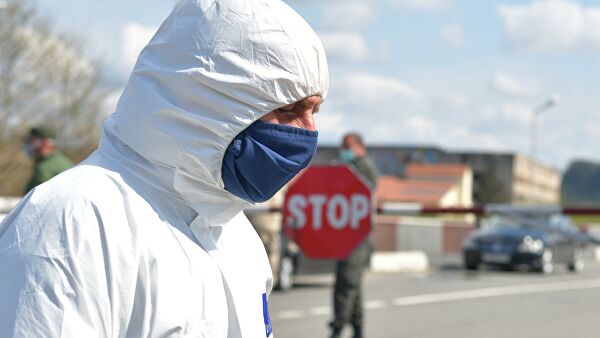
And against this backdrop of mass skepticism, news of a major outbreak in Sukhumi arrived like a bolt from the blue. This time, potentially hundreds of people are infected. The epicenter of the disease's spread within the country turned out to be the two leading hospitals in Abkhazia — the Republican Hospital and the First Clinical Hospital. Several wards have already been closed, and the institutions themselves are now providing care only in emergency cases. All infected medical staff have been hospitalized at the Gudauta Covid center, and those who had contact with them have been placed in self-isolation.
At the same time, reports emerged of two members of Parliament having fallen ill. Both had attended plenary sessions involving representatives of the republic's public and political organizations. At each meeting, in addition to deputies and media representatives, approximately thirty people were present. Each of them could have been in direct contact with the infected deputies and consequently spread the infection further.
Residents of Abkhazia are now holding their breath, awaiting further developments. Already, pharmacy workers are reporting a renewed surge in demand for gloves, masks, and disinfectants. For now, these goods are still available in pharmacies — but how long existing stocks will last is something no one can predict.
Against the backdrop of the realization that resources are limited and new supplies are nowhere on the horizon, the remarks of Russia's Foreign Ministry spokesperson Maria Zakharova come across as something of a mockery. Facing hundreds of cameras, she told the world a story of Russia's regular assistance to Abkhazia. "Since the beginning of the pandemic, in response to a request from the Abkhazian side, we have been providing Vector test systems for laboratory diagnosis of the new coronavirus free of charge," Zakharova announced at her weekly briefing on July 23rd. According to her, in addition to ongoing assistance, Russia had dispatched radiation, chemical, and biological protection units of the Black Sea Fleet to Abkhazia, which used specialized equipment to carry out disinfection of facilities. "Russia is prepared to continue providing the necessary assistance," the Foreign Ministry's official spokesperson concluded.
But in reality, all of this amounts to little more than empty words. Since mid-March of this year and up to the present day, it has been impossible to bring protective equipment, medical supplies, and — most critically — the ventilators so urgently needed in hospitals into Abkhazia. Russia imposed a ban on the export of all of the above, including to its strategic partner, friend, and neighbor Abkhazia. The republic's authorities can only manage to bring goods into Abkhazian territory under the auspices of international organizations. There is simply no other way.
While the situation remained under control, existing stocks — of PCR tests, for instance — were sufficient. But now, when potentially hundreds of people may be infected with coronavirus — requiring a minimum of three tests per person — those stocks are a drop in the ocean. And how specialists, placed in extraordinarily difficult, if not impossible, conditions will manage is a very open question.
Panic among the population is only growing. In a single day, more than 300 people need to be tested. Abkhazia has one single laboratory, which was already operating at full capacity even before this new outbreak. They now face round-the-clock analysis so that medical staff can promptly isolate patients with Covid-19.
But in all likelihood, they will not be working non-stop for long — or rather, only until the last PCR test runs out. This is not speculation; it is the reality Abkhazia will have to confront within the very next few days.
Throughout all of this, the other neighbor — Georgia — has been offering assistance: protective equipment, medical supplies, and everything else necessary. And that offer remains open.
Kristina Avidzba
The text contains place names and terminology used in the self-proclaimed Republic of Abkhazia. Opinions expressed in the publication reflect the views of the author and do not necessarily represent the position of the editorial board.