
New Trade Routes Planned Along Georgia’s Occupation Lines
09/03/2026 22:17:00 Conflicts
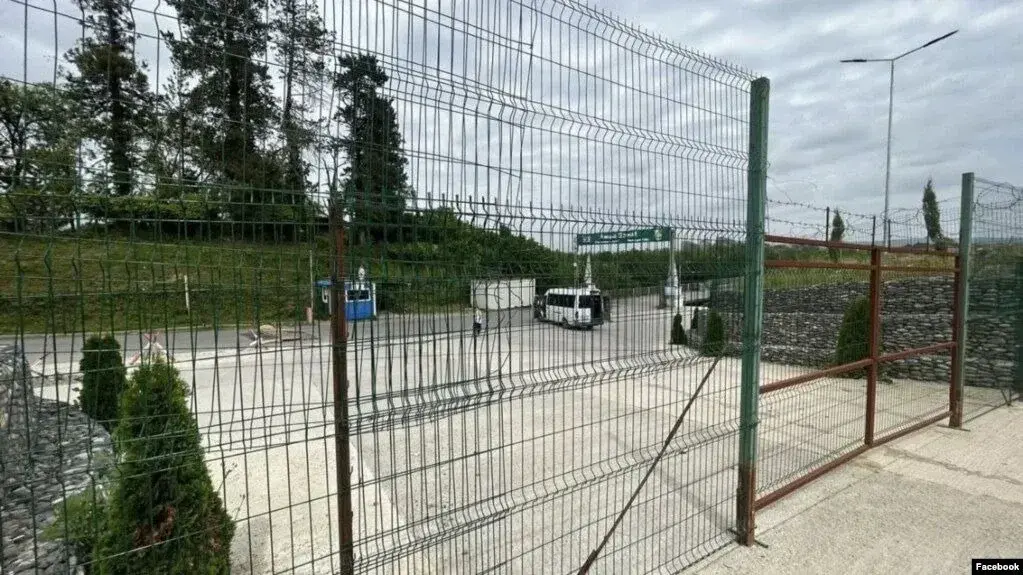
In December 2025, it emerged that a new "customs terminal" had been constructed in the occupied territory of Gali, near the Enguri Bridge. Construction is 80% complete, with only the installation of scanners and X-ray equipment remaining.
The news was disclosed by Astamur Akhsalba, the head of the "World Assembly of Peoples" — an organization established in occupied Abkhazia at Putin's initiative. In an interview with Sputnik radio, he acknowledged that the project had been conceived years ago but was deliberately kept secret.
"A war is underway here, and the entire West is opposing the Russian Federation… That is why it became necessary to temporarily conceal this information… We had to work quietly in order to bring it to a successful conclusion," Akhsalba stated. He further explained that the terminal would assist Russia in international trade, enabling the export of Russian goods to foreign markets and the import of foreign products in return. Akhsalba suggested that the cargo would consist primarily of vegetables and household appliances.
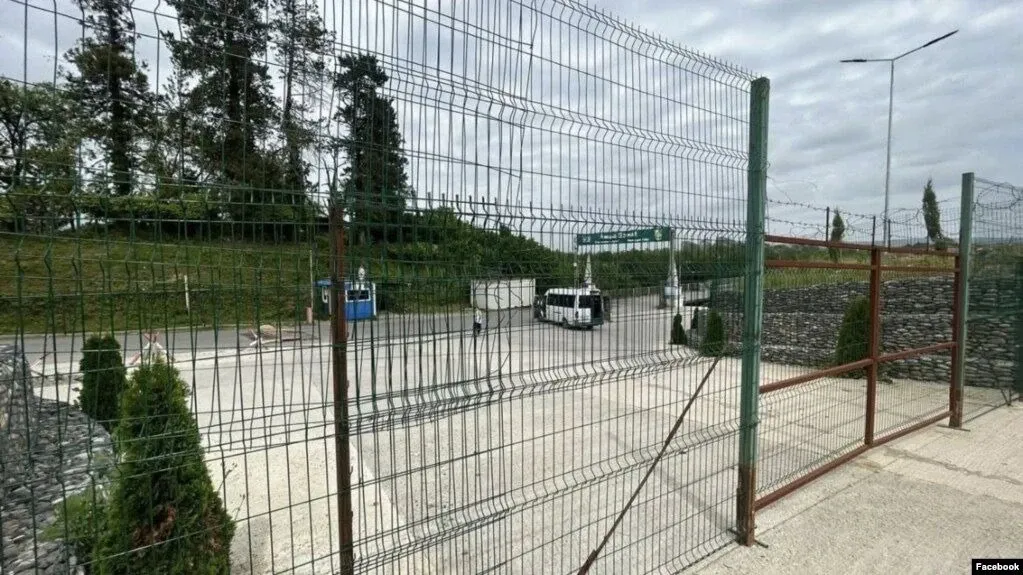
This story is closely connected to the largely forgotten Ergneti market. A significant coincidence emerges: the opening of the Gali terminal and the revival of the historic Ergneti market were planned almost simultaneously. Specifically:
- Media reports about a new customs point near the de facto border with Abkhazia surfaced in November 2023.
- Plans to revive the Ergneti market near the de facto border of the so-called South Ossetia were drawn up in July 2023.
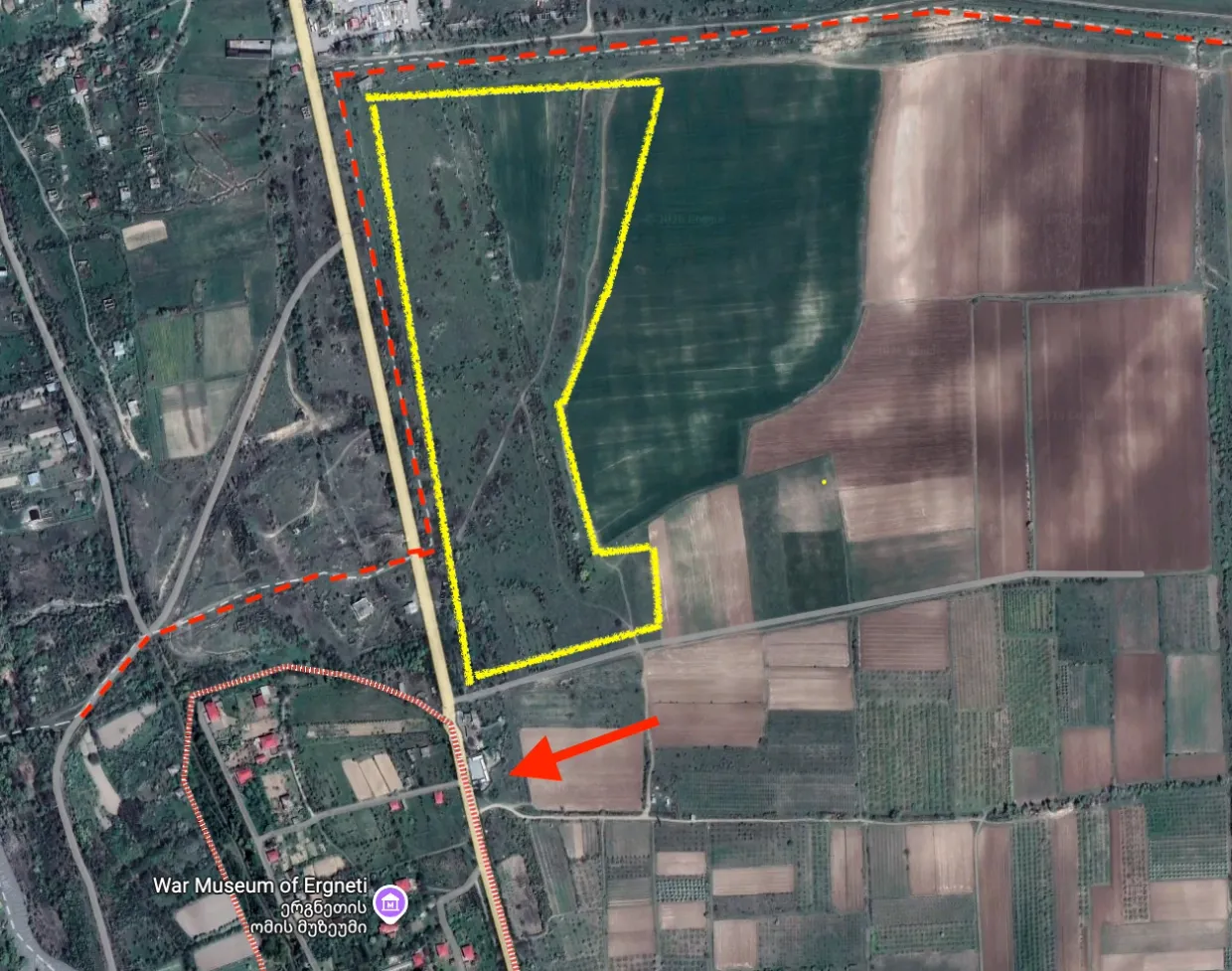
This is documented. The land parcels of the former historic market — totaling 17 hectares — have already been transferred to a private investor: LLC Kazbegi Hills, owned by Giorgi (Givi) Jalabadze, a businessman with ties to Georgian Dream.
It stands to reason that a marketplace and the movement of goods naturally imply the movement of people as well. This raises pressing questions: How can the movement of thousands of people across the occupation line — the so-called border — be controlled without compromising state security? How can the appearance of an official crossing point or a functioning de facto border be avoided? And how can one prevent the implicit recognition of the de facto regime or a violation of the Law on Occupied Territories?
Particularly noteworthy is the fact that LLC Kazbegi Hills' official email address is terminalikazbegi@gmail.com — listed as the company's contact in both the registry extract and its company charter. This name is telling: it strongly suggests that the company's activities are linked to the construction of a terminal. Given that the company holds no land elsewhere, it is logical to conclude that the terminal was designed specifically for Ergneti.
We set out to determine who gave the ‘green light’ for trade along the occupation line — and what the next steps might be.
LLC Kazbegi Hills acquired land parcels in Ergneti in June–July 2023:
- Two parcels totaling 168,736 sq.m were purchased directly from the state at a price of 1 GEL per sq.m;
- 2,670 sq.m was acquired from a private individual, Gela Doijashvili, for 5,200 GEL — approximately 2 GEL per sq.m.
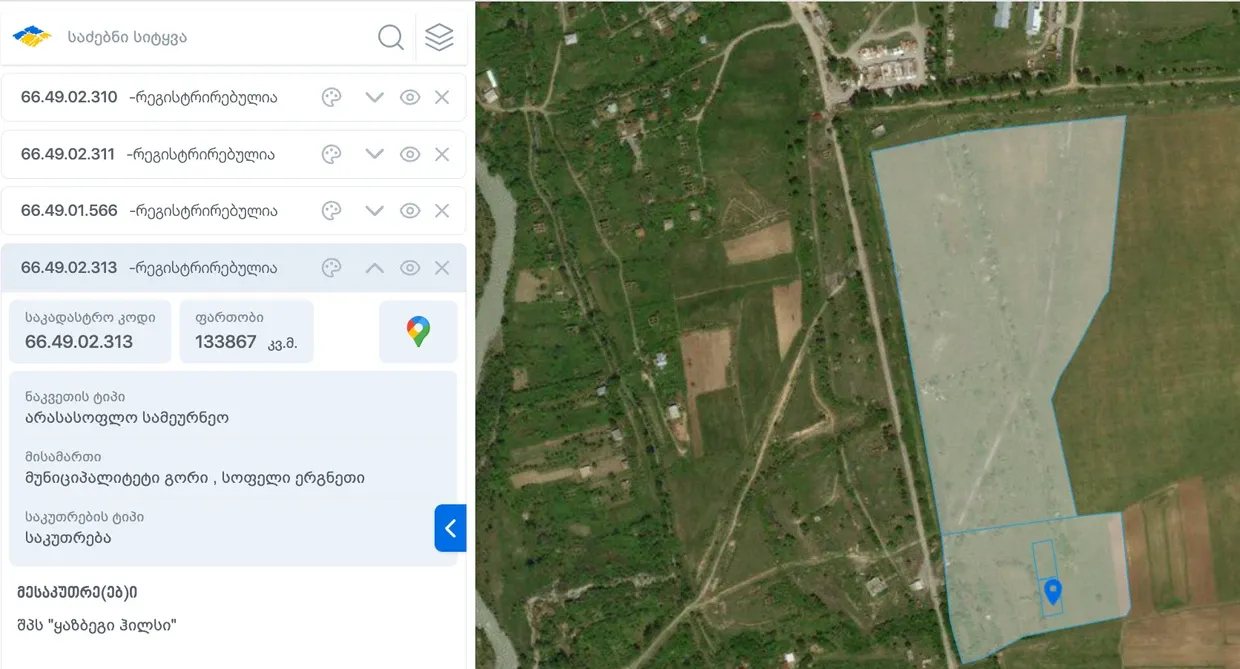
In exchange for this nominal price, Jalabadze's company undertook to construct and open a commercial space with a car park within three years, committing to an investment of 6 million GEL.
The purchase agreement concluded between the National Agency of State Property and LLC Kazbegi Hills in July 2023 stipulates that the company must:
"Ensure the development of the property (each land parcel or part thereof), which includes (but may not be limited to) the construction and commencement of operation of commercial (including warehouse/retail) premises, the arrangement of a car park for no fewer than 200 vehicles, and the commissioning of the relevant structures in accordance with the procedures established by law."
We asked the National Agency of State Property on what basis the purchase agreement was executed and whether it monitors the obligations fulfilled by Kazbegi Hills to date. The press office confirmed only that the agreement is grounded in a government decree — one that cannot be viewed, as the government did not publish its 2023 decrees. We have formally requested the document and will update this article if it is provided.
As noted, the company was required to open the commercial facility near the so-called border within three years — meaning the deadline falls in July 2026. Yet at present, nothing is happening on the site: the land is overgrown with vegetation and not even fenced off, at least as visible on satellite imagery. A physical visit proved impossible, as the area lies beyond the Georgian side's checkpoint.
The project, it appears, is temporarily frozen — but the parcel adjacent to the occupation line remains in the company's possession, and the purchase agreement remains in force.
The commercial and trading intent of Jalabadze's company is evident in its own charter. The business registry lists "Kazbegi Hills'" official activities as, among other things, wholesale and retail trade, local and international transportation, and the sale of timber, metals, oil and oil products.
To find out what business plans the company has in Ergneti, we reached out directly to Giorgi (Givi) Jalabadze himself. His phone number was switched off, so we sent our questions via WhatsApp. As of now, he has not responded.
There has been no word from the Gori City Hall either. Two weeks ago, we requested to send us all documents submitted by "Kazbegi Hills" in order to obtain a construction permit. We also attempted to obtain information from the so-called South Ossetia de facto Ministry of Foreign Affairs, but they too have not replied to our inquiry.
The land plot now owned by Giorgi Jalabadze's company was part of the capital assets of JSC "Partnership Fund" - now known as JSC Georgia's Development Fund - from June to September 2022. The stated mission of this organization is to attract private investors to state-owned property. We have asked the Fund what they had planned for this territory, and if they provide us with that information, it will be reflected in an updated version of this article.
The Risks of Trade Near the De Facto Border
We spoke with approximately 30 residents across seven villages in the occupation zone. None were surprised - they were aware of the land transfer and the plan to revive the market. Some of them categorically oppose the establishment of so-called border trade. With anger and astonishment they remarked: how can such a thing even be discussed - it would mean recognizing them, and hopefully it is nothing more than a rumor. Their words, shared anonymously:
"That topic has stalled - it won't happen. You'd have to recognize Tskhinvali to trade normally. That doesn't suit us. Who does it suit? How do you open a market for Tskhinvali without recognition?"
"We'd rather live in hardship than be their slaves."
"It means recognition - how could it be otherwise? … If you're saying we're heading toward Russia, just declare it openly. If you're calling for Europe…"
"How did they even come up with this? I don't understand. If they return Samachablo to us, let it be built! People won't object. But if everything stays as it is today and the market is built, who needs it? What status is it supposed to have? If our territories are returned, then build the market and a new city. That's what most people think."
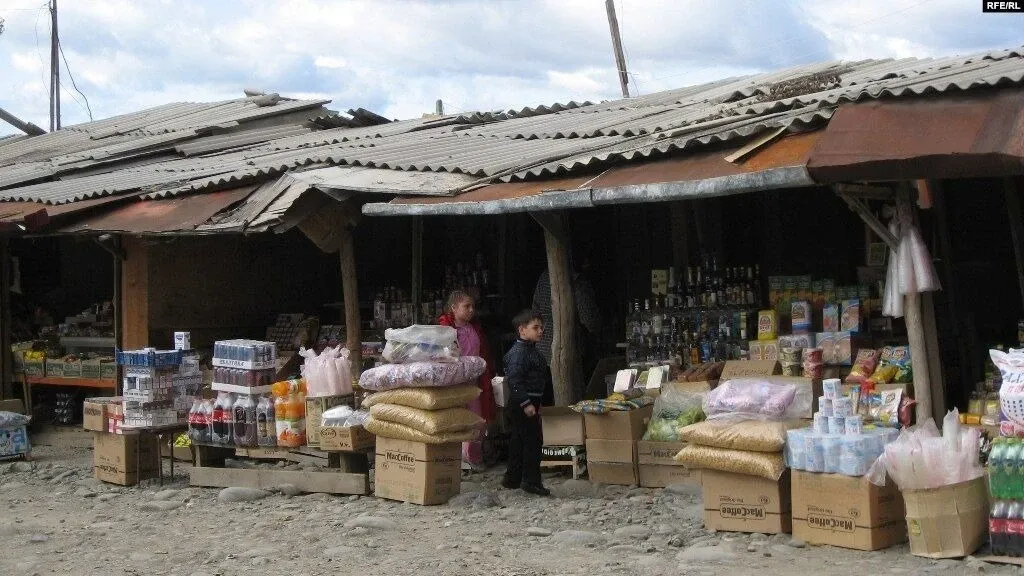
Some residents, however, supported the revival and recalled with nostalgia the good-neighbourly relations with Ossetians that the original market had fostered:
"There's no produce there [in Tskhinvali] - no vegetables, no fruit… They'd bring everything in: oil, sausage, sugar… It was cheap - don't you know how cheap things are in Russia?"
"Everything used to be incredibly cheap when you crossed over… But you know what it's like now. They'd probably have to reach an agreement with Russia first; otherwise, what's the point of spending money if the goods can't come through?"
The locals also knew the identity of the investor. They told us that businessman Givi Jalabadze was going to do this, but has now fled. Two more sources tell iFACT that Jalabadze has allegedly gone to Europe, to France.
The idea of reviving the Ergneti market has been heard periodically in the villages of the conflict zone. They recall that this was a promise of Ivanishvili's team back in 2012, although the issue became particularly relevant 2-3 years ago.
We asked conflict experts what the implementation of the project would harm Georgia and how it would benefit Russia. According to them, the central risk lies in the movement of goods and the positioning of customs officials near the occupation line. Two scenarios exist - both legally problematic:
Scenario 1: If Georgian customs officers are stationed on Jalabadze's parcel in Ergneti, goods arriving from the so-called South Ossetia would be treated as coming from a foreign country. This would effectively confer the status of a state border upon the occupation line - a line that has no legitimate basis.
Scenario 2: If Georgian customs officers are positioned not in Tskhinvali or Ergneti but at the Roki Tunnel - on the legally recognised Georgian-Russian border - this would imply that the occupying side is making a concession, in effect acknowledging Georgian control over the so-called South Ossetia. As researcher Zura Tsurtsumia put it, "a miracle would have to happen" for that.
"If cargo is to enter from Russia and our government agrees to this without our border guards standing at the Roki Tunnel, or without an agreement that neutral international companies will control the border, then this means legitimising the occupied territories. In that case, whether the terminal is built on their side of the occupation line or ours is already an irrelevant technicality. The main damage will already have been done if our side relinquishes control of the border and the registration of products entering through Roki," explained conflict researcher and analyst Zurab Tsurtsumia. He added that the war in Ukraine has made this scenario more urgent: seeking to evade sanctions, Russia has revived old transit routes - granting Abkhazia a new function and purpose, with Tskhinvali now next in line.
Conflict researcher Zurab Bendianishvili argues that if the market is revived, the cargo will inevitably come from Russia, since they don't produce anything in Tskhinvali that can be sold here:
"If border crossings are recorded in Ergneti and Enguri, Russia is thereby declaring that these are two independent states with their own borders. It is telling you that, as far as it is concerned, the border runs between Georgia and the so-called South Ossetia - and so the cargo transit infrastructure must be established there, just as it exists at Larsi and every other official border crossing. That already means recognition. What products could possibly come out of Tskhinvali that would require such infrastructure? It's absurd. Nothing is produced there. There used to be excellent Ossetian cheese, but even that is declining. Villages are emptying, everything is in deficit. On the contrary, everything is imported from Russia - farms, plantations, and orchards have been established in the North Caucasus. So Tskhinvali has nothing of its own."
Zurab Bendianishvili and Zurab Tsurtsumia believe that if the market does indeed open, it will directly conflict with the Law on Occupied Territories, and that "Georgian Dream" would need to amend it — for instance, through a normative act.
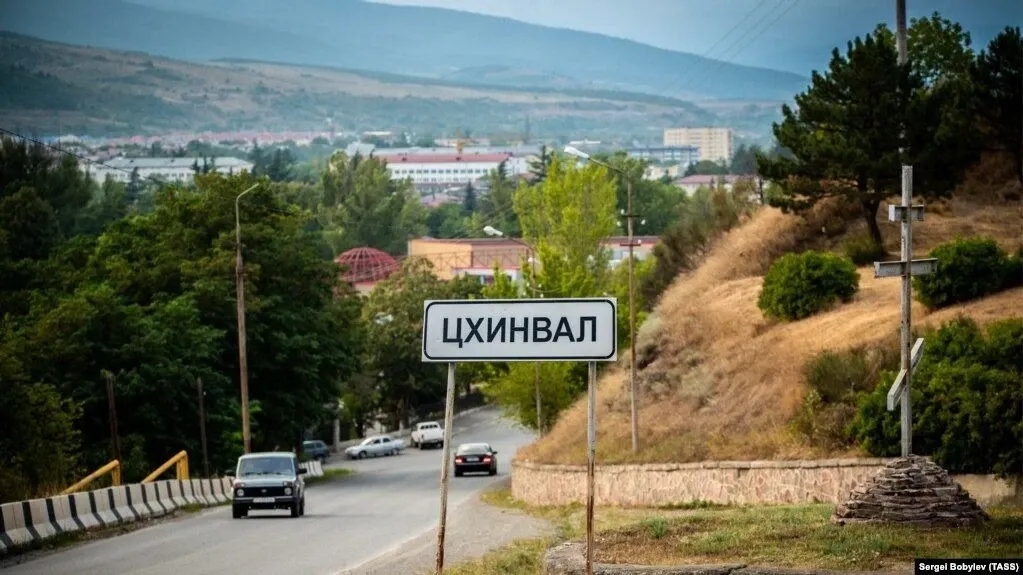
Jalabadze and His Ties to Georgian Dream
Giorgi (Givi) Jalabadze is originally from Kordi, a village near the so-called border. His name began appearing in public records approximately a decade ago. In 2016, he donated 25,000 GEL to ‘Georgian Dream. From 2017, his main companies were registered, and active business operations began.
The relationship between Jalabadze and the ‘Georgian Dream’ government was mutually beneficial: the businessman financed the party; in return, he received privileges — including no-competition auctions and state land at nominal prices. He currently owns 11 companies, including:
- LLC Agro Mall — owner of the Gori Tsmindatskali market, spanning 12 hectares of commercial space, with a private car park and the Gorgia’ shopping centre;
- LLC Helsi — owns the "Helsi Home" multi-functional residential complex on Stalin Avenue in central Gori, complete with a gym and swimming pool. Part of the land was purchased at an unconditional state auction in 2020 for 51,000 GEL (102 GEL per sq.m);
- LLC Varskvlavi (Star) — a construction company with two residential blocks in Gori and a forest-adjacent plot in Bakuriani. Shareholding: 90% Jalabadze, 5% Levan Duchidze (former head of the Constitutional Security Department's Shida Kartli regional division, 2010–2012), 5% David Muradashvili (dual Georgian-Russian citizen). The company was co-founded in 2017 with Olympic champion Giorgi Kandelaki, who held shares until 2022. Kandelaki was arrested in September 2025 for the production of illicit alcohol and untaxed cigarettes. Along with him, the brother of businessman Jalabadze, Kartlos Jalabadze, was also arrested. Three months later, Kandelaki and Jalabadze were released from the courtroom on bail.
The Varskvlavi example illustrates the mechanism at work. In 2020–2021, the Ministry of Internally Displaced Persons housed refugees in two residential buildings in Gori — both built by LLC Varskvlavi. The ministry structured the tender to suit the company: Varskvlavi had proposed delivering the units within 80 days at 420 USD per sq.m; the ministry then announced an identical tender with a three-month deadline. The State Audit Service concluded that the delivery deadline restriction was unnecessary and unfairly excluded competitors requiring more time.
The ministry went further, tailoring a second tender to purchase flats on Rustaveli Street from Varskvlavi — this time at 470 USD per sq.m, when a competing firm was offering the same units for 50 USD less. The result: the state treasury was overcharged by 120,000 USD.
- LLC Miva Builders — purchased a 5-hectare state parcel in 2024 under a conditional auction, committing to a 5 million GEL investment to build a bus and heavy vehicle stop, a medical post, supermarkets, 47 food outlets, a children's entertainment area, and a waiting room for 150 people. Part of the work was due in January 2026, the rest by summer 2027 — but no active construction is currently visible;
- LLC Guramishvili 5 — holds a 3,872 sq m plot in central Gori near the Justice House, where a private driving school, "Rbola," currently operates.
Jalabadze's wife, Tea Metreveli, is a co-owner of six companies, including LLC GR Group, which has operated the "Villa Park" restaurant since 2024.
Together, Jalabadze and his wife hold real estate totalling 7 hectares in Gori, the villages of Karaleti, Kordi, and Biisi, as well as a private house and apartments in Tbilisi and Bakuriani.
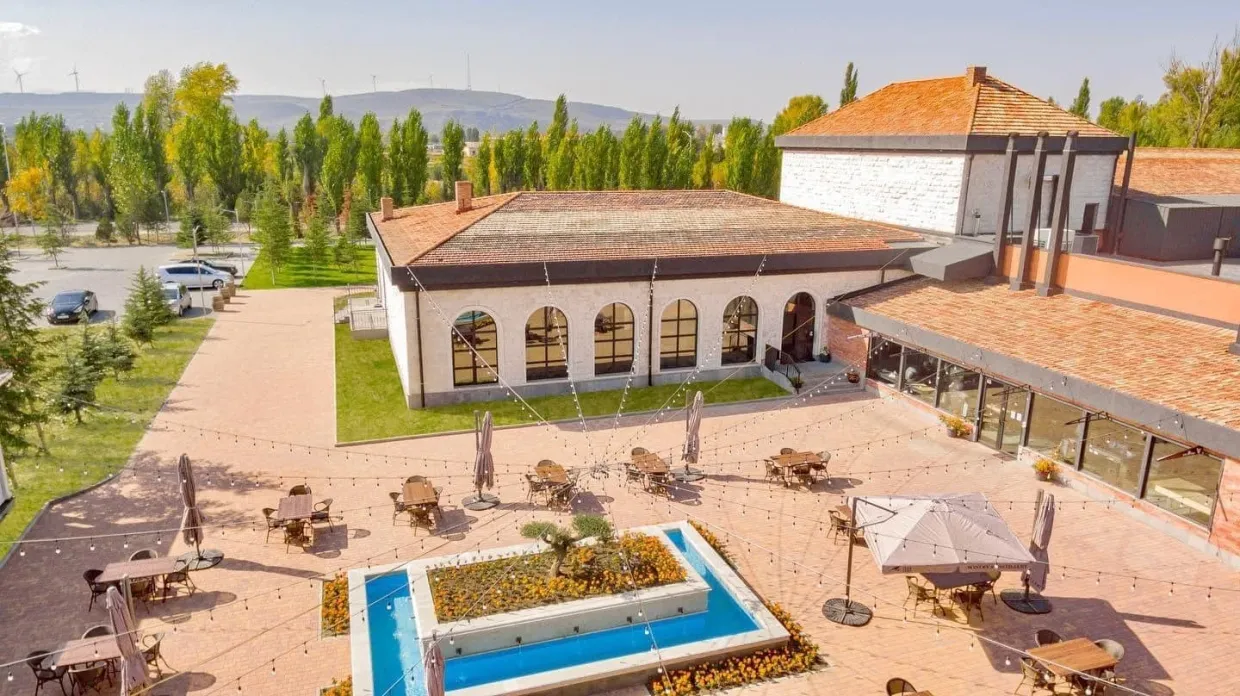
Jalabadze also has a close business relationship with Ophelia Makrakhidze, daughter of former Gori majoritarian MP Ioseb Makrakhidze. Together they own a 2-hectare plot in the Ateni Gorge, near the sulphur springs of Biisi village. In March 2025, local outlet Qartli’s Ambebi reported that Jalabadze, Makrakhidze, and businessman Paata Mikava had applied to Gori City Hall for a hotel construction permit at the Biisi springs. Mikava is a co-owner, alongside Ioseb Makrakhidze, of LLC Ibolia — a company repeatedly implicated in the extraction of state budget funds and in tender manipulation.
It is a matter of record that Giorgi Jalabadze and the Ivanishvili government operated on a basis of mutual accommodation. The idea of opening the market must have been approved by this government — without such approval, the transfer of 17 hectares adjacent to the occupation line would not have been possible.
Conflict researchers believe this episode is part of a coordinated Russian strategy — designed to exploit both Abkhazia and the so-called South Ossetia, and to open transit routes. The key question is what Georgian Dream's response will be.
As Zurab Bendianishvili puts it: "Moscow is making unilateral decisions and testing how far it can go. Agreement to this would represent an extreme curtailment of Georgian sovereignty — a renunciation of territorial integrity and a surrender of any prospect of reunification."
iFact will continue to monitor developments in Ergneti and update this article as new information becomes available.