
"Abkhazia's Population Is in Favor of Establishing Trade Relations with Georgia Without Politics. You Cannot Live on Hostility Alone and on the Russians' 'Love'"
11/03/2021 09:21:54 Conflicts
The uproar surrounding Abkhazian entrepreneur Benur Kviray's trip to Georgia has been deliberately inflated and is greatly to someone's advantage. This is the view of the majority of Abkhazia's residents, who are hearing endless speculation on the subject. Most importantly, no matter what emphasis or meaning was attempted to be attached to this private visit — all of it was in vain. Ordinary Abkhazian citizens did not believe in any conspiracy or betrayal by Benur Kviray — and moreover have begun asking themselves why certain people are so reluctant to see trade relations with Georgia established.
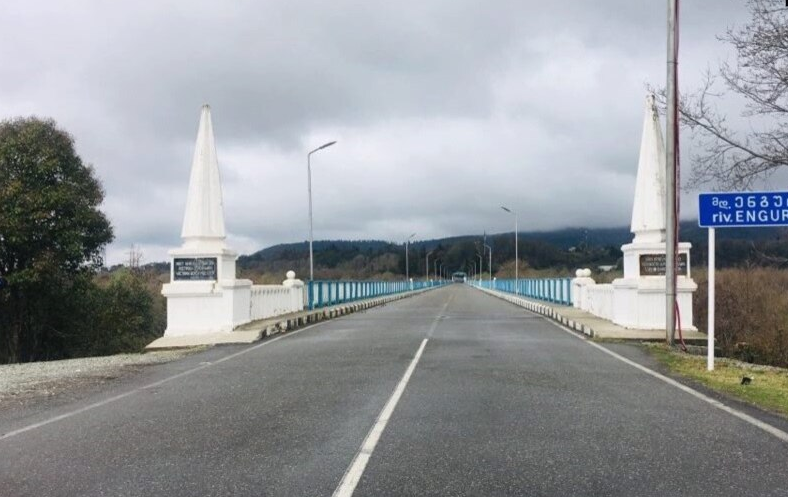
The whole story has its own rather complex backstory. Immediately after the end of the war — around 1995 — the border along the Inguri River was something of a Silk Road, across which goods of every conceivable variety were transported. Or has anyone forgotten how cheap stolen foreign cars were imported into Abkhazia, at one point flooding the entire republic? Perhaps some prefer not to recall how these same vehicles were registered with the traffic police without the right of resale? Or perhaps some are trying to forget the export to Georgia of cigarettes, nuts, and much else of value — including the rarest species of timber?
That is precisely the point: for many years, certain people enriched themselves on an enormous scale from the contraband trade — which is now being not only clamped down on, but redirected for the benefit of the republic. Their resistance is entirely understandable: who would want to lose such a well-oiled, multi-million-ruble feeding trough?
In order under no circumstances to expose themselves — to show their faces to the people, so to speak — it is precisely they who each time attempt to manufacture a scandal around this subject, framing the uproar as betrayal and surrender of state interests. Only certain gentlemen in the opposition seem to forget that an Abkhazia mired in debt and poverty is trying to survive this way — not as they do, in behind-the-scenes dealings and for their own pockets, but for the benefit of the country and its residents, who are thoroughly tired of all these games of patriots and traitors.
What actually happened — and why have the authorities only now decided to speak publicly about establishing trade and economic relations with Georgia? According to our interlocutors, it is not only the deep crisis and the deteriorating relations with Russia that have prompted this.
"According to the logic of these pseudo-patriots, we should sit in silence even when Russia blocks our ability to export citrus, mimosa, and nuts. What is the justification for this? Look around — nowhere are there conditions as terrible as at our border with Russia. First it is a fly, then a tick, then something else. For more than twenty years the Russians have been creating catastrophic conditions for us at the border — and we are not even supposed to have the right to change this lawlessness? Official trade with Georgia will not only improve the situation, but will show the Russians that we are not in a hopeless position, that we have a choice," says our interlocutor Remzi.
"What dreadful thing would happen if open trade with Georgia were established — what is it that the opponents of this question are so afraid of? I simply do not understand. And what does recognition have to do with it? One might think that when you buy 'Bush legs' or French perfume, you first demand recognition of our independence. Politics is politics, and trade is trade in its own right. There is no need to reinvent the wheel — it was invented long ago," says our interlocutor Amra.
There are no real trade and economic relations between Russia and Abkhazia — despite all the talk about them that has gone on and continues — according to our interlocutors, who consider what exists to be "not relations, but some kind of caricature of them."
"Year after year the rules change, tariffs and taxes go up — in short, everything is done to prevent us from purchasing goods and exporting our own. They fleece Abkhazia as much as they can — is this what normal partnership relations entail? Of course not. And all of Abkhazia's requests to change this inhuman situation are ignored. Moreover, as soon as we raise the subject, even more unbearable conditions are created for us. Perhaps Russia will change its attitude when it understands that Abkhazia has acquired a choice," says our interlocutor Ruslan.
"What dreadful thing would happen if our goods appeared on a Georgian shop counter, or their goods were officially sold here? One might think our markets and shops are piled high with our own produce — rather than goods from Georgia. Enough of lying to your own people and doing harm to your own country. The population is in favor of establishing trade relations with Georgia without politics. You cannot live on hostility alone and on the Russians' 'love.' This is something we have all seen with our own eyes," says our interlocutor Fatima.
In many countries around the world that have experienced war and conflict, trade and economic ties are the very first to be established — because these states need to get back on their feet, restore their economies, and feed their own citizens. Abkhazia, unlike other countries, finds itself geographically in a situation where the way out is either through Russia or through Georgia. The Turkish corridor was closed to us many years ago — with no small assistance from the Russians. One might say the choice is limited. And over the twenty-seven years since the war, we have made use of only one side — which has done nothing but infringe on our interests and continues to do so. For any step Abkhazia takes, Russia creates a countermeasure — and as a consequence of all these good-neighborly and brotherly relations, Abkhazia and its citizens are on the brink of collapse and oblivion.
Benur Kviray's attempt not only to look in a direction other than Russia, but to broach the subject of a way out of the current situation, has turned into yet another round of political tension in Abkhazia. And most troublingly — not without the help of Abkhazians themselves, who over twenty-seven years have grown accustomed to receiving and carrying out the Kremlin's orders. How else could it be? For without all this uproar, God forbid, the republic might begin to live better. How then would Russia manage to put a collar on it and turn it into a remote province?
It is heartening that in Abkhazia, despite the heavy burden of Russia's pressure, there are still conscious people who understand that the people and the state must have a choice. And that they must make that choice themselves, without the help of the large neighbor.
And to those who are still conducting harmful pro-Russian rhetoric in Abkhazia, I would like to pose a question: what are you so afraid of in the establishment of trade relations with the Georgians — Abkhazians are not going to stop being on good terms with the Russians? Or does Russia interpret trade with Georgia as something more — something it will no longer be able to control?
Perhaps the great friend will finally allow Abkhazians to decide for themselves what and how to do things — what is good for them and what is bad. Perhaps then Russians and officials of every stripe will stop proclaiming that Russia has been spoon-feeding us for many years and that it is time for Abkhazia to start earning for itself rather than living with an outstretched hand toward the Russians.
The times when someone else made decisions for Abkhazian society appear to be receding. More and more often I hear on the streets talk of the fact that Abkhazia has the right — and must — decide for itself what is best for it. Gratitude for the Russians' assistance in the war was and remains — that is unchanged. But how we live and how we develop will be decided by our own heads.
Kristina Avidzba
The text contains place names and terminology used in the self-proclaimed Republic of Abkhazia. Opinions expressed in the publication reflect the views of the author and do not necessarily represent the position of the editorial board.