
The Little Secrets of Inal Ardzinba's Successes and the Russian Goals of His "Abkhazian" Youth Projects
10/03/2021 18:00:04 Conflicts
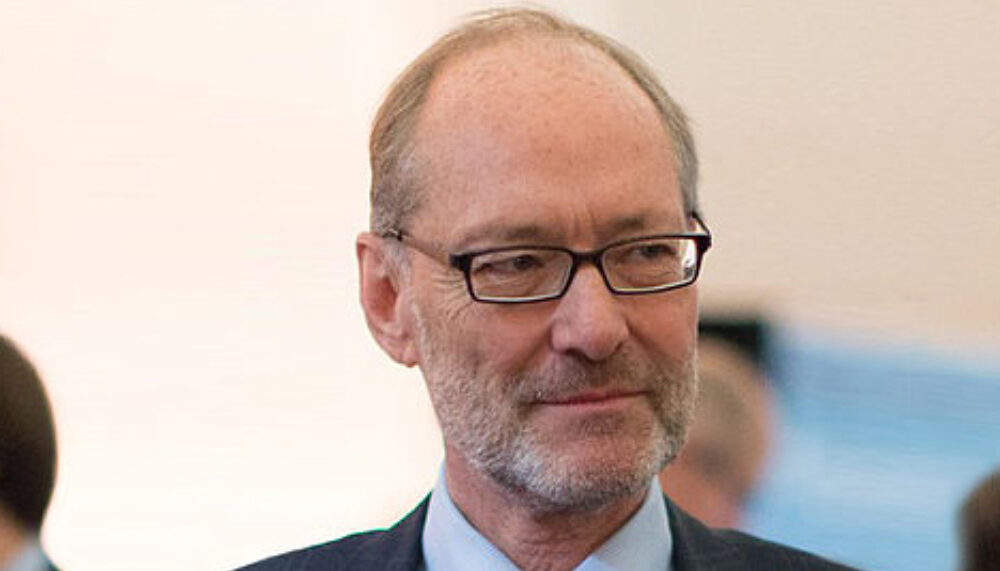
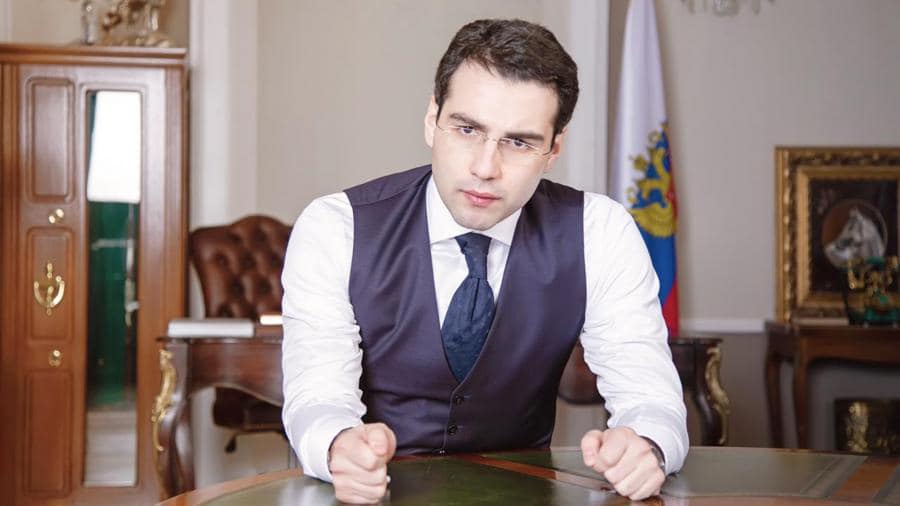
It is to these that the interview with young politician Inal Ardzinba — the author of these projects — published recently by the Apsnypress agency was devoted. Not long ago, many in Abkhazia sincerely placed great hopes in this young man. For Inal Batuvich, compared with many of his local peers — and indeed with many representatives of the older generation of Abkhazian politicians — appears more modern, better educated, more cultured, and is also a relative of the first "president" Vladislav Ardzinba, which in Abkhazia still carries considerable weight to this day. He was born in Sukhumi, but was cultivated as a politician in Russia, where by the age of thirty he had managed a surprisingly great deal: he was an employee of the Presidential Administration of the Russian Federation; from 2014 to 2018 he headed the Ukraine Department of the "Administration for Socio-Economic Cooperation with CIS States, Abkhazia, and South Ossetia"; in 2018 he became chairman of the Inter-Confessional Public Council for Youth Affairs under the Patriarch of Moscow and All Russia; and he holds the rank of Active State Counselor of the Russian Federation. At the same time, Inal Ardzinba is the author of projects developed specifically for Abkhazia under resonant, promising names: "Future of Abkhazia," "Pride of Abkhazia," and "Ambassadors of Goodwill." In January of last year he announced a possible creation of a new party in the homeland — but the right moment for this, it appears, still lies ahead. For now, Inal Batuvich continues to promote his project "Pride of Abkhazia" among Abkhazian youth.
It must be said that meetings within the framework of this project were held in all districts of Abkhazia. Young people of a wide range of ages were not only invited to participate in conversations with Inal Ardzinba, but were promised that if they "showed themselves well," they would be helped into Russian universities and subsequently placed in employment in Russian state institutions. Inal Ardzinba demonstrated "by his own example" to Abkhazian youth — particularly to young people from rural areas — "what an ordinary Abkhazian lad can achieve if he studies hard and strives to reach the highest echelons of Russian power."
One might think — how wonderful; what motivation, what a benevolent and useful initiative. It is a shame, however, that all of this is nothing but a myth — a kind of brainwashing of purely Kremlin manufacture. For those in the know have long been aware that neither academic excellence nor any other objective factors were decisive for Inal Ardzinba in reaching his heights — and that in reality his advancement in Russia was facilitated by a wealthy family and close kinship with the family of the first Abkhazian "president." The politician himself, of course, says none of this to young people. Nor does he mention that several years ago he was among the first to renounce his Abkhazian "citizenship" in favor of retaining his position in the Russian Presidential Administration. Inal also conceals the conflict with Vladislav Surkov over the misappropriation of hundreds of millions of rubles directed by Russia to the assistance of the Donbas it had occupied. Those in the know understood from the outset that this was precisely what forced the young Abkhazian official to leave Russian state service. But his influential relatives spared no effort to arrange, in 2018, for Inal to be installed as chairman of the Council for Youth Affairs under the Patriarch of Moscow and All Russia. And the "Pride of Abkhazia" project — with its, to put it mildly, ambiguous goals, which we shall discuss below — was needed by Inal Ardzinba precisely in order to regain the confidence of Russia's top leadership and the position he had lost through his own greed.
It is perhaps unsurprising that the winners of the aforementioned project in Abkhazia turn out, in practice, to be children of close family friends of Inal — rather than hopeful, genuinely motivated representatives of ordinary Abkhazian youth. Incidentally, the process of conducting his meetings is itself illuminating: for some reason Inal Ardzinba is heavily guarded in the homeland by representatives of Russia's Federal Protective Service. The names and surnames of the participants in these project meetings are registered in advance, and it is very difficult for non-registered attendees to penetrate the tight ring of military personnel.
Now — to the goals and objectives of the project. Its official theme is "Abkhazian youth receiving a quality education" — which for some reason is "only possible in Russia." But in practice, the meetings most often discuss political questions, presented by Inal Batuvich also exclusively in a pro-Russian key. The message, roughly, is: Abkhazia cannot take any independent actions or personal initiatives without Russia; and in general, the best thing for Abkhazia would be to become part of Russia — "then unlimited opportunities to study and work would open up for young people." Such is the "progressive" Abkhazian "patriot" that Russia has cultivated for Abkhazia, and such are the "advanced" ideas with which he diligently feeds the younger Abkhazian generation. You might say this cannot be. Try attending his meetings — if you manage to get through, you will hear it all with your own ears. And for the quite possible event that you cannot, I suggest reading carefully the aforementioned interview: much of what Inal says at his meetings with young people is contained in it, albeit in somewhat veiled form.
Inal Batuvich begins by quoting Stalin — which does not sit particularly well with a progressive young politician and constitutes a small but additional stroke to his political portrait. "The most valuable asset is intelligence"; "Personnel must be carefully cultivated" — Ardzinba declares. And this is hard to argue with. The question is simply who cultivates the personnel, to what end, on the basis of what ideology and value system. And Inal here clearly has in mind the system according to which he himself was cultivated in Russia over many years. Otherwise he could hardly, while speaking of the value of intelligence, have forgotten to mention that the critical thinking of the younger generation cannot be developed if — as he himself does — young people continue to be fed Kremlin narratives about how without Russia Abkhazia is a powerless nothing; how everyone else around is a treacherous enemy with a "Jesuitical" policy of "drawing" Abkhazia into some kind of mousetrap; how Russia is an irreplaceable partner — both political and trade-economic — and that looking in any other direction is harmful. Inal would hardly, were he serving Abkhazia rather than the Kremlin, have forgotten to mention that harmonizing Abkhazian legislation with Russia's authoritarian legislation "at Moscow's dictation" is an injection not of progress but on the contrary of regression; that it is precisely such years-long Russian injections that have been dragging Abkhazia not forward but backward; that Abkhazia cannot harmonize its legislation with Russia's — for example in the part concerning the designation of media and NGOs as foreign agents — since this would give Moscow final and complete control over public opinion in Abkhazia, leaving no room for the development of critical thinking among Abkhazian youth; that it is inadmissible to ratify the "Program for the Formation of a Common Social and Economic Space" being pushed by Moscow — in particular the three points most important to the Russian "friend" (on "dual citizenship," on lifting the ban on the acquisition of land and other real estate — as well as energy and other strategic assets — by foreigners, meaning Russians), since this will bring Abkhazia only one thing: complete absorption by the "strategic friend."
"We need to improve the image of Abkhazia in Russia and on the international stage as a whole, which will favorably affect the tourist and investment attractiveness of our country," says Inal Batuvich — while failing to mention that by taking Russia as its model, a country whose image throughout the civilized world has long been thoroughly and irrevocably tarnished, Abkhazia will never improve its own image and therefore will never achieve tourist or investment attractiveness. "It is necessary to activate the investment direction through quality interdepartmental contacts with the Russian Federation," says Ardzinba — as though unaware that it is precisely Russia, and no one else, that recently, in the height of Abkhazia's tourist season, imposed a tourist blockade on it; in the height of the citrus sales season — an economic blockade that continues to this day, in the mimosa season; and that it is precisely because of Russia's "selflessly friendly" plans to "help Abkhazia in every way" that over just the last few days, more than two tonnes of Abkhazian mimosa have failed to reach Russia.
"Abkhazia must become a reliable partner for the international community," says Inal Batuvich. But how to achieve this while taking Putinist Russia as a model — a country that for the entire civilized world is not a partner but threat number one — he does not specify. The young politician does not mention that if Abkhazia genuinely strives to be recognized by the international community, its task is to build relations with the entire world — not only with Russia, whose communication over nearly thirty years has not helped it become a truly independent state, but has merely placed it before the danger of annexation by its "strategic partner." Incidentally, hints about Abkhazia's "incapacity" and statements about the "necessity of joining Russia" are heard from Moscow with increasing frequency. Against this backdrop, Inal ought to have told young people that if Sukhumi wants to have something more substantial in its hands than a verbal protest against such initiatives from Moscow, now is the time to shake itself awake and intensify cooperation with other partners. It would also be worth Inal's while to admit to Abkhazian youth that in order to be recognized by the international community, Abkhazia must demonstrate that it wants to conform to the values accepted in the civilized world — and not in Putinist Russia and a couple of its satellites.
And finally, Inal does not tell young people the most important thing: as long as Abkhazia continues to follow Russia's lead, the system within it will be the same as in Moscow; young personnel will be cultivated for that system; intellectual capital will languish unrealized in the homeland; and Abkhazia itself, as a consequence, will never rid itself of obsolete legislation, total corruption, nepotism and deception of the people, official impunity, or stagnation — will never begin to develop independently, will never achieve a developed economy, a modern political culture, real democracy — and consequently will never become a truly independent state. Why? Because Putinist Russia remains, in its mentality, an empire — and empires need not developed friends, partners, and neighbors, but enslaved peoples.
Gvantsa Pipia
The material was prepared as part of a joint project of the Accent news agency and the non-governmental organization GRASS, implemented with the financial support of the Open Information Partnership (OIP).