
A Country in Exchange for Handouts
19/12/2020 13:26:24 Conflicts
Could things have been different? They could — and even still can, if only we wake from our slumber, open our eyes, and finally come to our senses. For Abkhazia has magnificent nature, one of the most comfortable climates on earth, a place rich in mineral resources, abundant fresh water, where even the most exotic plants take root with ease. So why, in such conditions, could it not become an efficient producer of agricultural goods, a tourist paradise, an investment-attractive destination where international companies — real ones — would genuinely invest? Something tells me that investors and tourists from Nauru and Venezuela are not planning to visit us in the next hundred years.
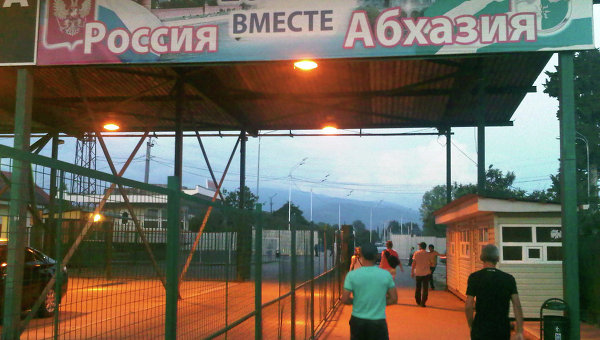
But Abkhazia chose a different path — entrusting its future entirely to Russia, signing with it in 2014 an agreement on alliance and strategic partnership, and on November 12th, 2020 also the "Program for the Formation of a Common Social and Economic Space Based on the Harmonization of Legislation." Now, judging by the way our president "reassured" the people of Abkhazia on December 3rd — in effect declaring that there is already no way out without Russia, even if one very much wished for it — only one prospect awaits us: accession to yet another alliance of Russia's "friends," being assembled by the "strategic friend" to serve its own interests — other failed states just like us.
How did it come to this? How, with such a starting capital, could we sink so low? How have we managed to live in ruin until now, freezing in winter without electricity? How did we allow fertile fields to lie abandoned, and unemployment to flourish and drive the younger generation into drug addiction and apathy? What is the reason? It comes down to a small thing — the systematic disregard for laws, corruption, dependence on the Russian financial drip, and of course politics. This is how it was under the previous authorities, and this is how it is now. Except there is simply nowhere further left to sink.
What has the new Abkhazian government distinguished itself by over the nearly full year it has been in power? Unsuccessful kowtowing before the strategic partner, rolling power cuts, an inability to resolve elementary problems that had in one way or another been resolved in Abkhazia until now. Where is everything that was promised after the revolution and new elections? It is understood that not everything can happen at once — but should there not be at least some hint of positive change? There is none. There are, however, hints of the negative — namely, the loss of statehood and the quiet, unresisted absorption by our own "strategic friend."
Yes, things were not easy before either — but revenues from Russian tourist flows, combined with the investment program, at least allowed some balancing of the books, some talk of economic development, the payment of at least some wages and pensions, and the expectation of — if not prosperity — then at least not decline. A country with colossal development potential was surviving, however barely. But the potential remained nothing more than potential — and the cause was, without question, politics: development in conditions of isolation is impossible. This is an axiom — and the Russian "strategic friend" made clever use of it, turning a blind eye to the insatiable greed of Abkhazian officials in the service of its own interests, while increasingly addicting Abkhazia to the needle of its financial handouts — so that one day, at the moment of reckoning, it could demand payment: Abkhazia's statehood.
And that moment is now approaching: Russian financial assistance to the republic has ceased; trade relations with the Russian Federation have been reduced to Abkhazia serving as a market for the "friendly" state's goods. Now the laws of a Republic transformed from an independent state into a dependent, fawning country can be brought to heel as well. No one that modern Russia has ever helped has ever been the better for it. And many in Abkhazia have already grasped this.
At first it seemed that the new president, Aslan Bzhania, understood this too. His words about trade relations with Georgia were dictated by economic practicality and strategic political considerations that could have helped our country break out of its economic and political impasse — enabling the state to gradually make the lives of its citizens dignified through a developing economy, investments, and favorable conditions for business. But alas — the country's new leaders, having promised much during the elections and delivered nothing, placed their hopes in a miracle. And the miracle never came — probably because miracles do not happen. I will add one qualification, however: for them personally, the miracle already did occur — they are received at the Kremlin, where they make exactly the same kinds of promises.
And yet it is already clear from countless examples that Russian officials — having achieved the amendment of Abkhazian laws to serve their interests — will not allow Abkhazia to develop in the future either. If we align our laws with Russia's, we will no longer be the independent Republic of Abkhazia — we will be the Abkhazian Region of the Russian Federation. Is this what the elected president promised us? Is this what our heroes who gave their lives for independence wanted? For tranches under a cooperation agreement that the Russian side honored, after a fashion, for many years — are we now to live under someone else's laws? Is that the logic of the "strategic partner" and our new president? Will our Constitution be changed too — the way Russia recently "amended" its own? And are these not excessively high sacrifices in exchange for yet another handout, which will immediately be stolen by those who begged for it and agreed to all the conditions?
Where has the resolve of the president and the government gone? Where are the sensible initiatives on trade relations with Georgia that they announced not so long ago — initiatives whose realization could have had a substantial and effective impact on Abkhazia's economy, allowing our state to move gradually, yet nonetheless, toward a path of normal economic development? It is sad that the president, having outlined a number of economic proposals, is not implementing them. It is sad to see an impasse forming when the country does have a way out — but is being prevented from taking a step toward a better future.
The "strategic partner" is revising its strategy in the partnership, while the new representatives of the other partner have agreed in advance to everything. One can only hope that they will fail to deliver on their promises in this matter too — as they have failed to deliver on everything they promised us during the elections.
Rinat Kvarcheliya
The text contains place names and terminology used in the self-proclaimed Republic of Abkhazia.
Opinions expressed in the publication reflect the views of the author and do not necessarily represent the position of the editorial board.
The material was prepared as part of a joint project of the Accent news agency and the non-governmental organization GRASS, implemented with the financial support of the Open Information Partnership (OIP).