
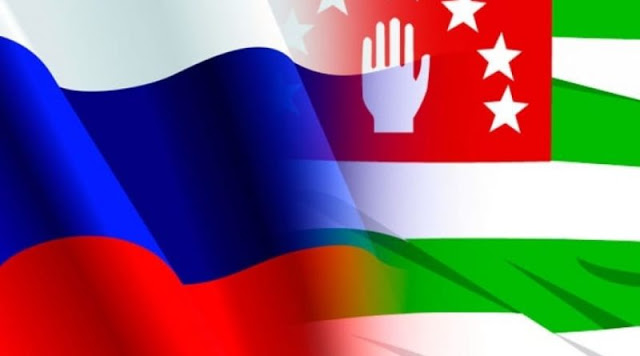
Abkhazia. A Moment of Truth
26/10/2020 15:35:43 Conflicts
We live in anxious, difficult, but significant times — times when momentous events may be just around the corner; when things seem as bad as they could possibly be, yet there are no grounds for confidence that they cannot get worse — if anything, quite the opposite. "What is all this alarmism, where is it coming from?" — our Abkhazian readers might have asked a couple of months ago. And some of them did ask, while others — being under the constant influence of Russian propaganda — dismissed it all without question as "Georgian information plants." But now things are different. Moscow has laid its cards on the table, and the danger of losing Abkhazian "statehood" has taken on such clear contours that it is already being openly discussed in Sukhumi itself — and over recent weeks, not only by ordinary social media users.
Abkhazian society might have marked as a "point of no return" the ideas that began to emanate from Moscow as early as last summer — and then escalated "upward" from civic figures to deputies — about the "necessity" of Abkhazia's accession to Russia. Later — on the twelfth anniversary of recognition — one might have identified such a "point" in Moscow's declaration that "South Ossetia" — ready to join Russia today — had become "a fully realized sovereign state," while Abkhazia — which has no desire to join anyone — was "not passing the test of its own statehood entirely successfully." And the document sent from Moscow — as it turned out, at the end of last year, but only surfacing several days ago — the "Program for the Formation of a Common Social and Economic Space" with its corresponding 46-point "Legislation Harmonization Plan," currently lying before the Abkhazian "parliament," could certainly have been identified as such a "point."
What to designate as this "point" is no longer particularly important. For in reality, the legislative foundation for the Kremlin's plans was laid six years ago — in 2014, through the so-called major framework agreement. Since then, everything has been heading precisely toward where Abkhazia now finds itself. Only one small thing remained — and Russia chose its moment for moving to open action with perfectly explicable logic: now, while Abkhazia is struggling to survive its fight against the coronavirus, the Kremlin finds it easier to realize its long-held political objectives "without unnecessary noise and dust."
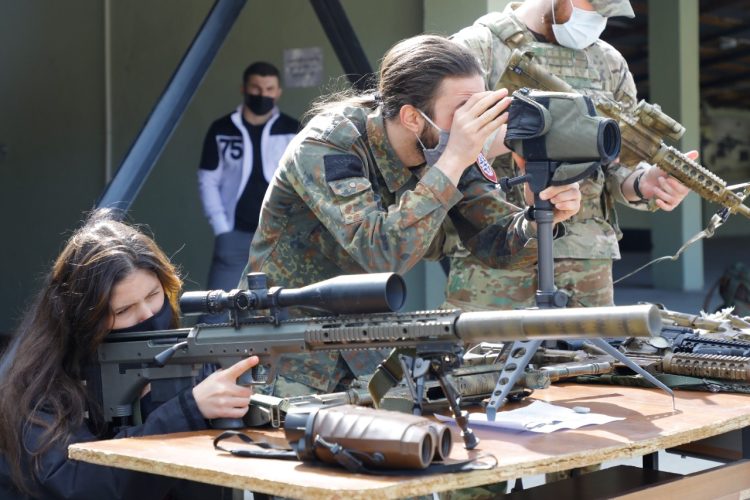
But even if the "noise and dust" — in the form of the negative reaction already manifesting in Abkhazian society — becomes a real obstacle, in all likelihood it will traditionally be attributed to "the influence of Georgian propaganda," or at most be turned into a "positive" force by force of circumstances. (Incidentally, the quantity of military force being built up in Abkhazia over the past several months — under the guise of exercises, medical assistance, and so on — raises serious questions among many of the republic's residents: for in such a difficult period, the assistance of a "strategic partner" and "friend" ought to be medical and financial — of which there is practically none — but certainly not military.)
For now, the Kremlin is getting by with "lesser" measures: the cessation of financial assistance; an effective medical blockade against the backdrop of an already extremely difficult epidemiological situation — which Sukhumi is managing with its last remaining strength, and only with the help of Tbilisi and international organizations; threats from Minister Lavrov; and in recent days — "soft" ground-probing through various Abkhazian figures.
For instance, just recently, against the backdrop of the surfacing of Moscow's 46-point plan, the head of the constitutional reform commission under the Abkhazian "president," Natella Akaba, began speaking of the possible realization of essentially that very persistent Kremlin "partnership proposal" — the lifting of the ban on the sale of Abkhazian real estate to Russian citizens. The veiling "sauce" chosen was the idea of creating "advanced development territories" (ADTs) and "building apartments," which, according to Akaba's assurances, would have "a positive effect on job creation and the activation of economic growth in the republic." "ADTs are international practice — they mean development, they mean jobs, especially in depressed regions," she stated.
In essence, however, what is being proposed is the creation in Abkhazia of territories with preferential tax conditions, simplified administrative procedures, and other privileges, where real estate could be sold to Russian citizens in circumvention of the law in force elsewhere in the territory — a law that Abkhazians have been defending "tooth and nail" under Kremlin pressure throughout recent years. This is precisely how the initiative was understood by a great many Abkhazian internet users.
Former "Vice-President" of Abkhazia Valery Arshba also joined in the ground-probing, going so far as to declare himself in favor of Abkhazia joining the Union State of the Russian Federation and the Republic of Belarus:
"I too — having worked with the great Vladislav for ten years as Vice-President of the country — have come in recent years to the conclusion that, in order to preserve the country and the Abkhazian nation, the elite of Abkhazia, together with its people, must make a fateful decision and — without losing its sovereignty — prepare to enter the already existing Union State of Russia and Belarus. Especially today, for the preservation of the Abkhazian ethnos, the most important task is the consolidation of all state-building forces — from representatives of the executive and legislative branches to other forces — into a single camp of state-patriotic orientation. We must all arrive at this historic decision together — otherwise we will all be complicit in the processes of the further destruction of the nation."
All the above-mentioned statements and ideas, taken together, allow one — if not to assert, then at least to assume with good reason — that the Kremlin has launched the process of Abkhazia's annexation at full speed.
"In Moscow there is no understanding that Abkhazia and Russia have different tactical and technical characteristics and different characteristics of society. [...] The powerful Russian bureaucratic system has its own logic," believes Abkhazian historian and political analyst, former head of the "presidential administration," Astamur Tania. At the same time, in his view, Abkhazia has "effectively placed itself in the position of people living at the expense of the taxpayers of another state" — and until this question is resolved, it will be unable to argue to its "partner" that "this is not how such matters are resolved."
The fundamental problem is that Abkhazia has lacked any strategy for socio-economic and political development for a considerable period of time, Tania believes. "If we had such a model, we could tell our Russian partners that this does not fit within it — that we envision different parameters for Abkhazia's development and for cooperation with Russia. [...] We need to explain both to them and to ourselves what we want. [...] Don't we want to integrate into the international community, into the international market? Isn't that our goal? Don't we want to avoid existing in a reservation?" asks the former head of the "presidential administration," pointing to "the absolute obviousness of the need to diversify both the economy and the model of society's existence."
The fact that the divergence in views between the 12-year "strategic partners" is quite real — as is the Kremlin's disregard for Abkhazia's positions and its effective imposition of its own — is by now sufficiently apparent in many respects and sufficiently clear for Abkhazian society to think seriously about the necessity of diversifying both its economic and political ties. Many in Sukhumi already understand this — but time is running out.
In essence, a moment of truth has arrived for Abkhazia — a time to act decisively and without delay, but this time without mistakes. The right decision can not only save it, but create a solid foundation for the future. Inaction or error, on the other hand, could prove fatal.
Gvantsa Pipia
The material was prepared as part of a joint project of the Accent news agency and the non-governmental organization GRASS, implemented with the financial support of the Embassy of the Czech Republic in Georgia.