
How Russia Is Tightening the Noose Around the Neck of Abkhazia as It Struggles to Survive Its Confrontation with COVID-19
23/10/2020 17:06:04 Conflicts
If you were to ask how Abkhazia is living, I fear that even the finest experts would be unable to give a clear answer. And this has nothing to do with their not knowing all the nuances of the lives of Abkhazia's residents — it is simply that the situation is currently so complex that it defies not only explanation but prediction.
The first and foremost calamity facing Abkhazia today is the coronavirus. This disease, which has claimed countless lives across the world, has in Abkhazia exposed a series of important problems that were previously less visible. The healthcare system — which had signed dozens of treaties and agreements with strategic partner Russia, which had been reporting on the construction of new medical facilities and improving infrastructure — during the pandemic did not merely stumble, but disgraced itself before the entire world, demonstrating its inability to fulfil its primary function.
So as not to appear to be making unfounded claims, let me provide a few examples. When the coronavirus was raging across the world, Abkhazia got off comparatively lightly — three people were infected, one of whom died due to age and underlying conditions. At that time, doctors not only managed to contain the outbreak but also brought the population under control, compelling people to stay at home. Of course, not all the restrictions were fully observed — and yet the epidemiological situation was brought under control. The state was granted a breathing space of several months in which not only to bring the healthcare system into some semblance of order, but to prepare for a serious battle against the coronavirus infection. A Covid hospital was promptly set up on the basis of the Gudauta central district hospital, with all available reserves of forces and resources drawn in; and an agreement was reached with Russia for the provision of immediate emergency assistance in the event of a large influx of infected patients. This is how it was presented to the citizens of Abkhazia by the operational and coordination headquarters for combating coronavirus infection — which were, it should be noted, hastily established.
In reality, however, things turned out to be far from rosy. It emerged that the Gudauta hospital had been stocked with dozens of iron mesh beds from 1976, which had been gathering dust in district hospitals. The intensive care unit of the Covid center's infectious disease block was filled with old ventilators that had also been collected from across the republic.
A month passed, then another, and the population — exhausted by being cooped up in locked homes — began to rebel. How were they supposed to live without weddings, funerals, trips to Sochi's attractions, visits to the theatre and concerts?
The authorities, instead of tightening restrictive measures, not only loosened the quarantine but also abolished temperature checks for Russian tourists entering Abkhazia. By now no one can say with certainty exactly how the coronavirus made its way into Abkhazia — but the fact that the outbreak began after the border with Russia was opened is beyond dispute.
At first a couple of people fell ill; shortly afterward the numbers began to rise and Abkhazia's population grew alarmed. When the infection statistics began to spiral, talk emerged that Russia was doing everything in its power to block the delivery of medical supplies and medical products into Abkhazia across the state border. Meanwhile, whatever beds remained in district hospitals began to be quietly moved to the Gudauta Covid hospital. Medications and test kits were running out; Russia, instead of providing assistance, was blocking Abkhazia's every attempt to obtain medical equipment; the money in the state treasury was visibly evaporating. Behind the declared assistance and support from the strategic partner, great friend, and neighbor Russia — very little actual action. The large-scale crisis that was being spoken of as far back as the end of 2019 had turned into a genuine collapse.
"When my wife's sister fell ill, I began asking the doctors to transfer her to the Krasnodar regional hospital. They told me it was impossible — the places there are only for their own. The doctors themselves advised me to take my relative to Georgia, because only there are patients from Abkhazia accepted for treatment," our interlocutor Timur recounted.
The Abkhazian Ministry of Health keeps no statistics on the number of patients transferred to Georgian clinics for treatment. But according to unofficial data, by mid-October their number had exceeded 300.
Meanwhile, the republic is recording daily anti-records in the number of Covid-19 infections. October 20th — 133 cases; October 21st — 136; October 22nd — 144. The total number of confirmed coronavirus cases in Abkhazia stands at 3,450. Of these, 1,294 have recovered. There have been 33 fatalities.
The Gudauta Covid hospital currently has 150 patients receiving inpatient treatment. Of these, 30 are in serious condition and 76 in a moderate condition. The remainder are being treated at home under remote medical supervision.
An unprecedented chaos is unfolding in the republic — and here is why. Only a small proportion of the population manages to get tested for coronavirus infection. Test results take 10 to 15 days to arrive — sometimes longer. A CT scan is an entirely unaffordable luxury, as Abkhazia has only one functioning machine. And it is not free — the average cost ranges around 2,000 rubles.
Getting a lung X-ray without a negative coronavirus test result is impossible — whether paid or free — even when a person is suspected of having abnormalities in lung function. And where infected people can have an X-ray taken, there are no specialists to interpret the results. The X-ray images themselves are not given to patients to keep, which means the population is denied the possibility of seeking consultations from doctors outside Abkhazia.
Doctors are left, as it were, to treat patients by feel. And the treatment they prescribe differs quite significantly from the protocol approved by the World Health Organization.
"I don't believe in conspiracies. Or rather, I didn't believe in them until now — but what is happening in Abkhazia can only be called a conspiracy. There is no equipment because Russia will not allow it to be purchased. There are no medications because Russia will not allow them to be brought in. And so it turns out that by exploiting the coronavirus situation, they want to destroy us. Is that not so?" says our interlocutor Grigory. According to him, all the assistance that is actually being provided to Abkhazia comes from the entire world — but not from Russia — and this provokes enormous outrage among the republic's residents.
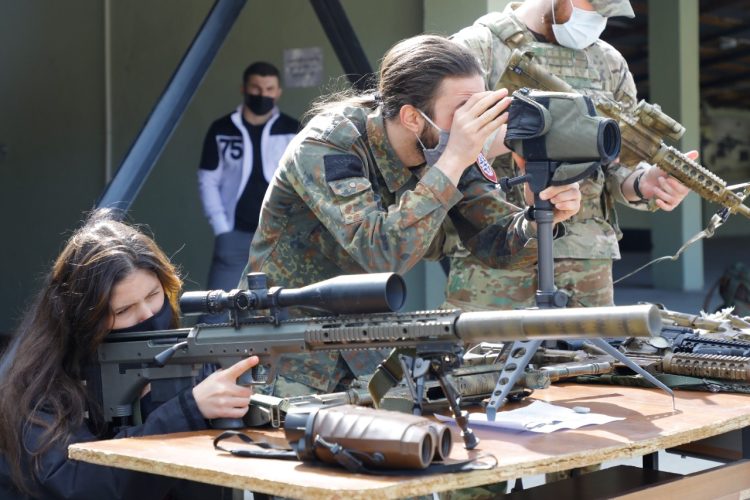
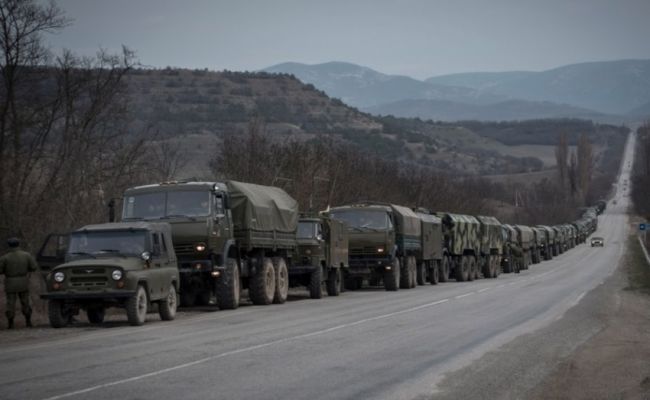
Another interlocutor — Zaur — considers everything that is happening to be the logical consequence of a direction Abkhazia has been heading for the past five or six years. "For the sake of positions and money, our government handed Abkhazia over to Russia's mercy back in 2014, and now the Russians are clearing the territory of everything superfluous," Zaur believes. According to him, the assistance itself looks laughable — most often what is sent to Abkhazia consists of "third-rate medical students or unwanted doctors who cannot find a use for them at home." "And the military hospital they deployed — supposedly to help Abkhazians — does anyone really believe this nonsense? Any sensible person understands that under the guise of a hospital, hundreds of pieces of military hardware and personnel have been brought into the republic. For what purpose, I hope I do not need to explain," says Zaur.
The growing military force being built up in Abkhazia over recent months — under the guise of exercises, medical missions, and various other pretexts — raises many questions among the republic's residents. In such a difficult period for the republic, assistance should be medical and financial — not military, our interlocutors believe. And only Georgia is providing it — accepting dozens of patients from Abkhazia in its clinics day after day.
And what of the coronavirus? The infection continues its advance. Medications were already running low for just a couple of months' supply — but given the frenzied pace of rising infections, they can be considered all but exhausted. There is nothing with which to purchase new ones; the republic's finances have long since given up even pretending. There are not enough doctors capable of treating the population. Famine is not far off.
Russia chose its timing with great effectiveness for resolving all the political objectives it had set itself. While Abkhazia is struggling to survive its confrontation with the coronavirus infection, its neighbor, friend, and strategic partner is tightening the noose around its neck. And it remains to be seen which battle the republic will lose first.
Astanda Bgamba
The text contains place names and terminology used in the self-proclaimed Republic of Abkhazia. Opinions expressed in the publication reflect the views of the author and do not necessarily represent the position of the editorial board.