
The Discord Over Bebua
10/10/2020 11:57:30 Conflicts
Passions in Abkhazian society refuse to die down over two events connected with the 27th anniversary of "Victory and Independence." The public continues to express outrage over an attempt to set fire to the Abkhazian flag, as well as over a decree issued by the "parliament" granting amnesty to a wide range of individuals, including those convicted of serious crimes.
The decree issued by the "parliament" on September 24th — which threw society into turmoil — also sparked controversy within the authorities themselves. Opponents point out that it was not coordinated with other "state" bodies and that in an already difficult environment, the amnesty is fraught with the gravest consequences. The initiators and supporters, meanwhile, express bewilderment: after all, this is the ninth amnesty act in the entire history of post-war Abkhazia, yet none of the previous ones ever provoked such criticism.
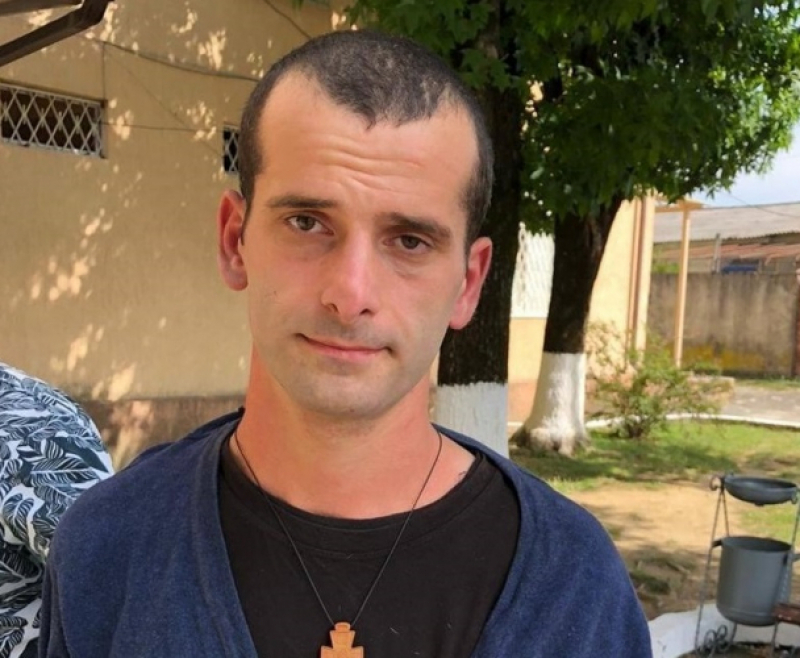
As for what happened on September 30th — directly on the day celebrating the anniversary — when 27-year-old Gali district resident Irakli (Nika) Bebua attempted to set fire to the Abkhazian flag in the center of Gali, Abkhazian society has split in two over the appropriate method of punishment. Arguments are raging on social media about whether he should be lynched or tried according to the law. And supporters of lynching are clearly in the majority. They tirelessly propose the most elaborate methods of retribution, including such suggestions as "put a tire over his head and burn him alive," "impale him on a stake," or "hang him upside down in the central square, like in Iran."
All of this, of course, sits entirely at odds with Abkhazia's declared aspiration to become a state widely recognized by the international community — one that respects human rights and freedoms, including freedom of thought and expression. For in developed democratic countries, flag-burning, while provoking an equally negative reaction, is recognized as a form of protest.
The fact that citizens have emerged in Abkhazian society who understand this is unquestionably a good sign. Like the members of the "lynching" camp, they do not condone what Nika Bebua did and are outraged to the limit — but they call on their fellow citizens to think about the image of Abkhazian society and, on that basis, the "prospects of the state."
What is troubling is that those who think in this way are still in the minority. As they were four years ago, after the public killing of Gigi Otkhozoria, when the majority of Abkhazian social media users tried to justify what Rashid Kanji-ogly had done. And yet from the reaction of the civilized part of the international community — from which Abkhazia awaits recognition — it has long been clear that when a law is broken, it is of absolutely no consequence whether this was done against an "enemy" or a "friend," what nationality the victim was, what nationality the perpetrator was — the guilty party must face punishment.
One would hope that those currently criticizing the Abkhazian law enforcement officers who promptly detained Nika Bebua and shielded him from the "lynchers" might also come to understand this. They did precisely the right thing, thereby taking care of both Abkhazia's image and its prospects.
The danger nonetheless persists: for in the prison where the convicted Bebua will be held, "lynchers" among the inmates are also plentiful. This is why his family fears for his life and health. This is why they would like to secure his transfer to territory under Tbilisi's control — while in no way condoning what he did, and perfectly aware that for such a step "no one in Abkhazia would pat him on the head." "The main thing is that he not be killed," Nika Bebua's uncle told TV Pirveli. "In their [the Abkhazians'] eyes he is a criminal. When on independence day someone burns your flag, of course he will be detained and prosecuted. The main thing is that he not be dealt with physically, and that his life not be put at risk."
It must be said that what Bebua did was poorly received by many people in Tbilisi. Of course, as in Abkhazia, there are those here too who dubbed him a "hero." But the majority of Georgian social media users were clearly displeased with his action and expressed bewilderment at how Bebua himself explained it — saying it was done in the name of "friendship." For any normal person understands that it is difficult to be friends with someone whose flag you have demonstratively burned — even if it had been done on any other day and not on the day celebrating "victory and independence." And of course, this damaged mutual understanding between the two sides.
"It is unknown who, and for what purpose, put it into his head to demonstratively burn the flag on precisely this day. Either he is simply crazy, or someone very much wanted us to hang him upside down in the square. This may be someone's provocation — possibly part of some plan in which Abkhazia comes after Karabakh," writes Abkhazian politician Tengiz Djopua on the matter.
"Interesting — what will those 'geniuses' who have lately been tearfully speaking of the 'necessity' of establishing cooperation with Georgia now say?" asks another Abkhazian internet user.
By intensifying anti-Georgian sentiment, the act of Nika Bebua — whether he intended it or not — also returned Abkhazian society to the debate about the status of Georgian citizens living in Abkhazia. Social media users write that they are a "fifth column," "conduits of Georgian policy," and that this is "a serious challenge to Abkhazia's national security."
In this light, Bebua's action could not possibly have served the interests of official Tbilisi — nor of those forces in Abkhazia that, against the backdrop of Russia's clearly deteriorating attitude, have recently been making considerable efforts to establish cooperation with Tbilisi. And the "lynchers'" version claiming that Bebua "acted on the instructions of Georgian security services" appears far removed from basic logic. If one is to speak of any conspiracies and deliberate provocations at all, what happened is of benefit precisely to those who oppose the rapprochement of Sukhumi and Tbilisi — those who would gladly throw another stone into this particular garden after the recent commotion surrounding the "secret" visit to Abkhazia of representatives of the pro-Russian Alliance of Patriots of Georgia, organized by Russian officials.
The lynching of Bebua — or even an excessively severe sentence — would have been a "tasty morsel" precisely for opponents of the Sukhumi-Tbilisi rapprochement. And there are people in Abkhazia who understand this.
"If this idiot had fallen into the hands of my comrades-in-arms, we would have given him a kick and let him go," writes one Abkhazian veteran on social media. A similar view was expressed by Abkhazian politician Tengiz Djopua: "In any case, this idiot must be returned to them [the Georgians] alive. We don't make war on lone lunatics and touring clowns."
However, no one appears to be in any hurry to release Bebua, who is currently held in a temporary detention facility under an administrative penalty — a 30-day arrest. What is more, a third charge — "possession of ammunition" — may be added to the two initial ones: "desecration of the State Coat of Arms or State Flag of the Republic of Abkhazia" and "deliberate destruction or damage of property under aggravating circumstances."
Tbilisi, for its part, is attempting to secure the detained man's release. The Georgian authorities have informed international partners and the co-chairs of the Geneva Discussions of what has occurred. And there is nothing surprising in Tbilisi's position. Regardless of whether Nika Bebua's action is morally acceptable to the Georgian side, any self-respecting state must and will protect the rights of its citizens, relying on the law.
In this context, one can recall the situation involving "presidential adviser" of Abkhazia Akhra Avidzba, arrested by Russia a few days ago for an incident that occurred two months earlier — when Avidzba, who was being prevented from leaving Russia over a debt to the state budget, rammed a "state border" with his armored jeep. No sensible person would applaud such an act — and no one did — but the Abkhazian side nonetheless attempted to defend its "citizen," admittedly without success so far. Yes, the situations are not identical: Abkhazia recognizes Russian laws, while Georgia does not recognize Abkhazian ones. And ramming a "state border" and burning a flag are clearly not the same thing. All the more reason for Abkhazian society to understand the position of the Georgian side, which is today defending the rights and interests of Nika Bebua.
One can also recall what this article began with — the amnesty for a wide range of prisoners, including those convicted of serious crimes. I fully understand how offensive Nika Bebua's act was to Abkhazians from a moral standpoint. But from a legal standpoint, what he did cannot in any way be characterized as a serious crime. And if the possibility of releasing recidivists can be contemplated, then one might perhaps think about showing some leniency to Bebua as well.
Given the change in Russia's attitude toward Abkhazia — about which Accent has written on multiple occasions and which practically everyone in Abkhazia has noticed over recent months — the urgent need to begin establishing cooperation with Tbilisi has become considerably sharper on the agenda. And leniency toward Nika Bebua might perhaps serve as a small but useful step along that path.
Ekaterine Tsanava
The material was prepared as part of a joint project of the Accent news agency and the non-governmental organization GRASS, implemented with the financial support of the Embassy of the Czech Republic in Georgia.