
Russia's "Friendly" Sabotage: Will Abkhazians Be Able to Survive Under Conditions of Isolation, Global Problems, and Constant Stress?
09/10/2020 17:57:12 Conflicts
Crisis, coronavirus, drugs. For Abkhazia, 2020 has become something of a test of resilience. There is a sense that the universe itself is trying to determine whether Abkhazians can survive under conditions of isolation, global problems, and constant stress.
The daily rise in coronavirus infections signals the beginning of a large-scale epidemic which, under Abkhazia's conditions, could well prove fatal. A healthcare system barely on its feet is holding on with its last remaining strength, though it has already yielded significant ground. A budget that initially patched numerous holes has abandoned the futile effort and cut expenditure to a minimum. The cost of living rises, business generates no income, and help is expected from nowhere. This, in brief, is Abkhazia's current existence.
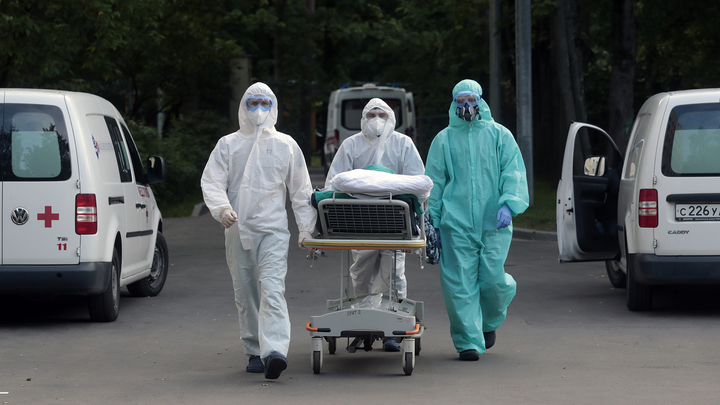
The insidious disease that has claimed millions of lives around the world has not only reached Abkhazia — it has run rampant here. All the more so given that conditions are fertile. There is no strict quarantine; laughably inadequate restrictions were introduced only on the eve of a full-scale epidemic; thousands of tourists roam the country and no one is remotely interested in checking their health status. To this must be added lavish wedding celebrations, schools operating despite a daily increase in infected teachers and pupils. Almost every other day, doctors record patient deaths at the Covid hospital both within the republic and beyond its borders. Moreover, it is no longer only the elderly from the high-risk group who are falling severely ill — perfectly healthy young people are too. And on October 6th, Abkhazia recorded its highest ever single-day tally of coronavirus infections — 103 cases. Over the course of the pandemic, 21 people have already died in the republic. The total number of confirmed coronavirus cases currently stands at 2,170.
Recently I spoke with a group of young people who expressed the thought that the authorities' inaction has a very specific meaning. "There is a feeling that they want to destroy us. The coronavirus has come to the aid of our enemies and now all that remains is to watch and wait for it to do its dirty work," one of our interlocutors believes. In this young man's view, Russia is deliberately blocking the purchase of medications and their delivery to Abkhazia, weakening the healthcare system and nullifying all the efforts of doctors. "Russia never particularly loved Abkhazia before — but what is happening now, all this pressure, we understand as an attempt to seize our territory by peaceful means," another interlocutor — a young woman — believes. According to her, all the talk from Russia about annexation did not come from nowhere. "It is their cunning plan, which our elders should have understood long ago. And now it turns out that our authorities can do nothing — and by hiding the truth from the people about what is happening, they are furthering Russia's plans. Our people may not want this, but by closing themselves off from the people they are silently helping the enemy to overcome us," she reflects.
The word "enemy" in relation to the strategic partner, neighbor, and friend Russia was first used in the republic relatively recently. And such views emerged after the truth came to light about why Abkhazia periodically runs short of tests, medications, and medical equipment. When to this news was added the understanding that Russia refuses to provide free treatment to Abkhazia's residents in its own Covid centers, society began speaking of the deliberate nature of such actions. And now, as the statistics of infections in the republic grow exponentially, a border closure may be added to all the existing misfortunes — unilaterally, at that. And Russia has apparently already warned its Abkhazian medical counterparts about this.
From the beginning of the disease's surge, Abkhazian society was assured day after day that help from Russia would come, and that infected patients, if necessary, would be treated at medical facilities in the Krasnodar region. Much was said at length about the routing system developed by Russia's Ministry of Health — supposedly planned with the convenience and needs of the republic's residents in mind. In reality, patients with severe cases were quietly being sent to Georgian clinics. For a while, the public knew little of what was happening and believed the authorities' assurances. The media also played their part, periodically announcing dialogue and meetings between Abkhazian and Russian doctors at the highest level. But when the number of cases being transferred to Georgia grew, people began asking awkward questions — to which no answers have been given to this day.
Residents of Abkhazia are now being transferred to clinics across the Inguri entirely legally — the Ministry of Health issues all necessary travel documents. The republic's leadership has for the first time managed to rein in the Russian border service representatives who had been creating problems at the Inguri crossing. At this stage they interfere very little, reluctantly playing the role of disgruntled silent observers. The ability to travel freely to Georgia for medical treatment became available to Abkhazia's residents relatively recently — around mid-September. Before that, even with all the necessary documents in hand, Russian military personnel blocked any attempt to cross the Inguri. There were even cases of a seriously ill patient being transported in an ambulance and turned back. The border closure during the pandemic has nothing to do with it. Russian FSB officers were unilaterally deciding who was and who was not permitted to leave the territory of Abkhazia, and local authorities had little influence over such arbitrary behavior.
Medical assistance in Georgia is provided free of charge to all without exception — despite the idle talk to the contrary. The flow of people traveling there for qualified medical care is growing daily. Some are left for treatment in Zugdidi, while the most seriously ill are sent to Tbilisi.
Meanwhile, the Gudauta Covid center is struggling to cope with the influx of infected patients at the limits of its capacity. Barely any free beds remain in the hospital. Children and adults share the same wards, side by side with medical workers who contracted coronavirus infection in the workplace. And the Abkhazian authorities have for the first time throughout the entire period issued a public warning about the deteriorating situation. What is surprising is that Abkhazian doctors had been forecasting exactly this state of affairs from the very beginning of the epidemic. At that time, the republic's leadership accused them of cowardice and alarmism. The public was told not to believe the predictions of "unpatriotic" doctors and was persuaded that help from Russia would arrive very soon.
The acute need has arrived — and the help has not. And so people are forced to save the lives of their loved ones in Georgia. If previously, those who availed themselves of Georgian medical assistance were equated with traitors to the homeland, even the most ardent opponents have now fallen silent — because they understand that Abkhazia's residents have no other way to save themselves from the deadly infection.
And the strategic partner, instead of assistance and support, sends to Abkhazia not medications and disinfectants, but ultimatums that will destroy not only the people, but the Abkhazian state itself.
"Someone who proposes conditions that threaten national security — who is he? A friend of Abkhazia? No. He is an enemy of Abkhazia. If you impose on me conditions that are killing my nation, I am obliged to regard you as an enemy of my people," believes Anatoly Otyrba, Professor of the Academy of Geopolitical Problems and member of the expert group on the formation of the strategy for linking the EAEU and the "Silk Road" under the Presidential Administration of Russia.
And what of the Ministry of Health and the Abkhazian authorities? They are silent — because they have no other choice. They cannot tell the entire world the truth: that during the most difficult period for Abkhazia, Russia has not only failed to extend a helping hand, but is doing everything in its power to destroy the state whose independence it once proclaimed itself.
Astanda Bgamba
The text contains place names and terminology used in the self-proclaimed Republic of Abkhazia. Opinions expressed in the publication reflect the views of the author and do not necessarily represent the position of the editorial board.