
Happy Upcoming Victory Day, Abkhazia — God Willing, Not the Last One...
29/09/2020 12:42:53 Conflicts
In a few days, Abkhazia will be marking the most important national holiday in the country's recent history — the 27th anniversary of victory in the Patriotic War of 1992–93. Every year on this day, mass celebrations and various events were organized. The people rejoiced, singing patriotic military songs.
Of course, on September 30th the country also remembers the brothers, sisters, and friends who perished in the war — but on this day those memories are intertwined with feelings of gratitude not only for the Freedom that was won, but for the opportunity given to the Abkhazian people to build their own future independently.
So it was until recently. In light of the events now unfolding — and the coronavirus has nothing to do with it — for the first time the celebration of Victory Day is overshadowed by heavy thoughts about the future of the homeland. There is no war, and the enemy no longer threatens us directly — yet the awareness that Abkhazia may be stripped not only of its identity and statehood but of its future hangs over every resident of Abkhazia like the Sword of Damocles. I am speaking of those for whom the word "homeland" carries a sacred meaning, and not merely the nominal designation of a place of birth.
Some will say: why paint such a grim picture — there is no real danger of losing sovereignty! Perhaps that is indeed how things appear through rose-tinted glasses. But in reality, Abkhazia stands on the threshold of great changes, behind which a serious danger awaits us all. And the terrifying thing is that the decision about the homeland's future will not be made by us, but for us.
For 27 years we have been building a state — raising it from nothing. The war emptied Abkhazia, reduced cities and villages to rubble, destroyed industrial facilities, and almost obliterated not only the cultural and historical heritage, but brought about the deaths of thousands of civilians. It was hard to rebuild the country after such large-scale destruction, but the people did not flinch, believing in their own strength — however undermined by war.
Reconstruction proceeded at a significant pace, and to this day a number of Abkhazia's districts look as though the war ended only yesterday. But even in the face of all the difficulties — the blockade and a series of sanctions ruinous to a state that had just survived a war — the people did not give up, having set themselves a goal: to revive the country.
This is how all the past years were lived. The goal has not changed, but achieving it has somehow grown only more difficult with each passing year. What is strange is that unlike the first post-war years, Abkhazia's borders have since opened, a number of countries have recognized it as an independent state, and Russia has begun providing financial assistance — yet the situation has not improved. We have not come to live better. The republic remains in ruins; there is no industry, no economy; the cost of living rises while the population grows poorer with each passing day. And to all the problems raining down on residents, one more has been added — the most significant of all.
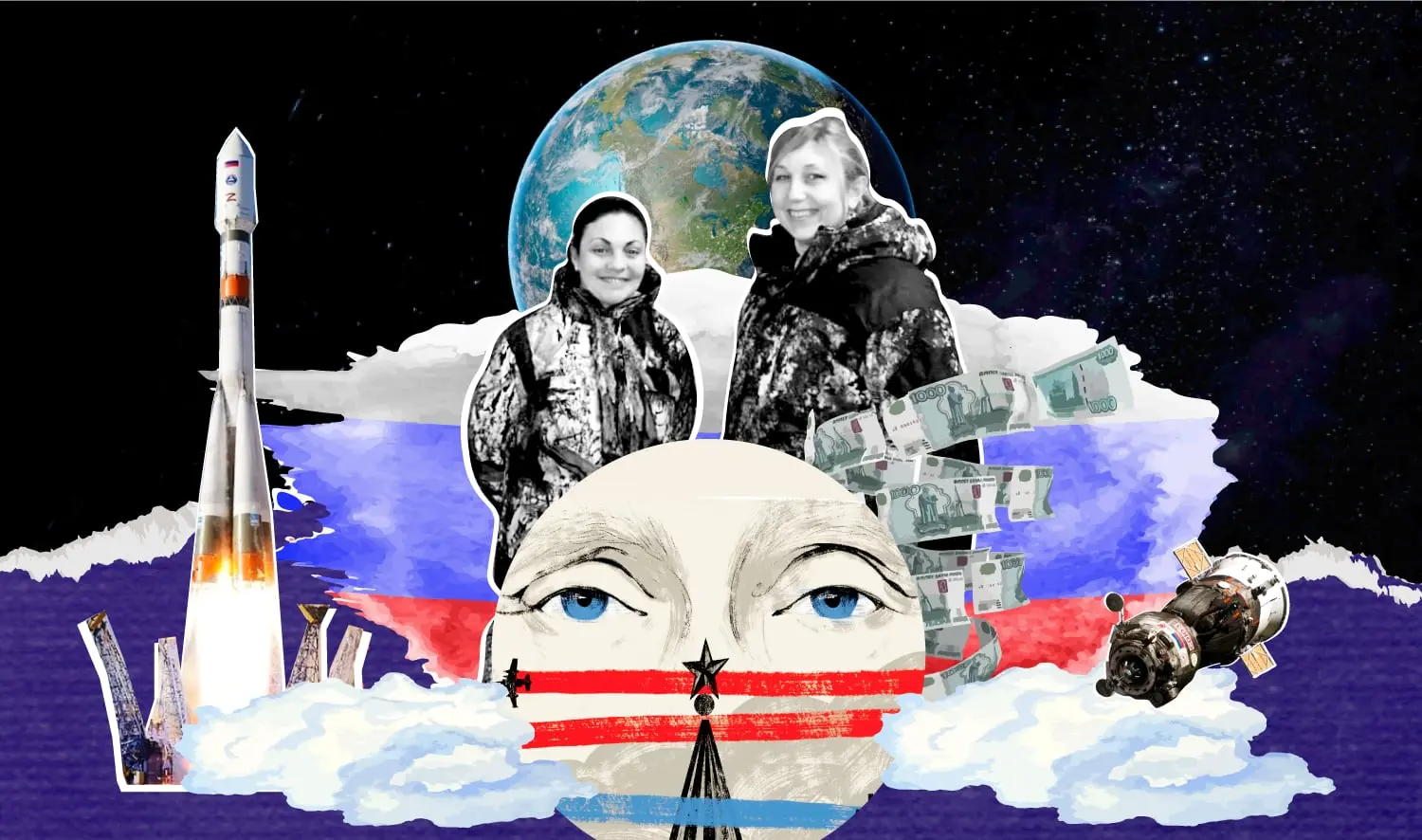
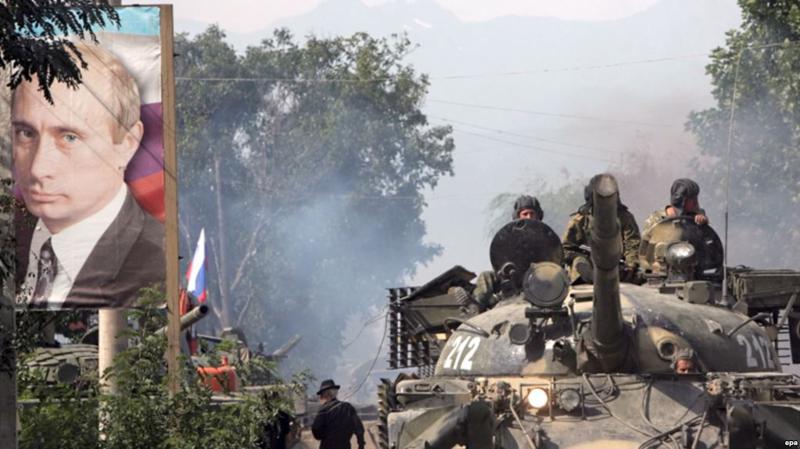
For the first time this year, the Russian side has in an ultimatum-like manner demanded that Abkhazia — to put it plainly — bid farewell to its statehood, its identity, and its future. Already at the very highest level, Moscow is speaking of annexing the republic's territory to the Russian state. In legal terms, this is called the "harmonization of legislation" with subsequent accession to the Russian Federation.
To say that this topic has only just emerged would be wrong — the Russian side had previously attempted on more than one occasion to place it on the agenda of its relations with Abkhazia. But then as now, these questions provoke a sharp reaction from Abkhazian society. "As far as I know, this process began as early as 2014–2015, and initially it was not about harmonization of legislation — it was about unification — the creation of a single, common legal norm. Possibly, according to the plan, these questions were supposed to have been resolved under the previous government, but since a new government came to power, it was decided to push these matters through," believes political analyst Tengiz Djopua. In his view, from the standpoint of national security and the preservation of the Abkhazian ethnos, resolving these questions in the manner proposed is inadmissible for Abkhazia.
"The tradition of one state existing on the direct injections of another must be abandoned — it is not in the interest of either Abkhazian or Russian society. Perhaps for a time it can be explained by geopolitics and certain strategic interests, but it cannot be practiced indefinitely. It will grow tiresome for Russian society, for Russian leadership, and for us too — such a degraded condition should be repugnant to us," believes former head of the presidential administration, historian, and political analyst Astamur Tania. In his view, the need for diversification of the economy and the model of Abkhazian society's existence is already absolutely evident. "We must explain to our Russian partners — with whom we have concluded not some casual agreement but a treaty of alliance and strategic partnership — that we cannot accept such decisions, because we have a development program. But first, as a country, we must collectively adopt that program," believes Astamur Tania.
Everyone understands that Abkhazia poses no strategic or geopolitical threat to Russia. Yet for reasons known only to themselves, the Russian elites have decided — however absurd it may sound — to absorb the Abkhazian state, turning it into yet another Russian backwater. And this assertion of mine is confirmed by a multitude of pieces of evidence. Take, for instance, the statement of Alliance of Patriots party chairman Zakhar Prilepin, the numerous pronouncements of State Duma deputy Konstantin Zatulin, and the documents received from Moscow by Abkhazia's presidential administration.
One of the most recent pieces of evidence is a press conference that recently took place on the platform of the Russian media group Patriot and the Federal News Agency under the title "Will Abkhazia and South Ossetia Become Part of Russia?" In the course of the event, politicians and experts discussed what has changed in Abkhazia and South Ossetia over the twelve years since their state status was recognized; what the republics aspire to — building an independent state or becoming part of the Russian Federation; and how dialogue with Georgia can be established and whether good-neighborly relations are possible. South Ossetian Parliament deputy David Sanakoyev, president of the Foundation for Assistance to the Development of the Republic of Abkhazia Vitaly Labakhua, co-chairman of the Russian Political Science Society Professor Stanislav Yeremeyev, vice-president of the International Foundation "Apsny" Maxim Gvinjia, and State Duma deputy Yevgeny Fyodorov expressed their views on these topical questions. I will not describe all the details of the meeting — I will merely draw attention to a number of statements by Russian politicians and experts. In Professor Stanislav Yeremeyev's view, Abkhazia and South Ossetia have only lost from independence — and this fact must be acknowledged. "Russia has always been strong in gathering lands around itself... This must be accepted as a given," noted Yeremeyev. "The most successful project — Russia — will serve as an example for neighboring states, whether Georgia or the Baltic states. Did they win from independence? No, they lost. Let us acknowledge: to live well, one must live together with one's family," Yeremeyev is convinced.
For his part, former Foreign Minister Maxim Gvinjia told the press conference participants that Abkhazia does in fact have relations with Georgia — both within the Geneva process and in the form of people's diplomacy. Problems in normal interaction arise only from the populism that forms the basis of Tbilisi's policy. "But time does its work. We must find paths to mutual understanding with Georgia," believes Gvinjia.
These remarks evidently did not sit well with the Russian politicians, who one after another began urging the Abkhazian representatives of the necessity of unification with the Russian state. In particular, State Duma deputy Yevgeny Fyodorov put forward an extremely peculiar argument which, in his view, should be the decisive factor in reaching a decision about joining Russia. In his opinion, "all territories that were once part of the USSR must unite again into a single state." "We need to move toward restoring our borders of 1945. Abkhazia and Ossetia were part of the USSR; they can join the Russian-Belarusian union. The concept of 'Russian' has always been multinational in origin. We must return to this. It should be the norm: if you love Russia and speak Russian, then you are Russian," emphad Yevgeny Fyodorov.
Whether we like it or not, the question of Abkhazia's accession to Russia is already being discussed not behind closed doors but quite openly. Yes, the senior figures of the Russian state have not yet said so directly — but it is clear enough that without their instruction, no one would be discussing this question.
In two days Abkhazia will be celebrating Victory Day, honoring the veterans who brought freedom to the Abkhazian people through a bloody war. I very much want to hope that my homeland will see many more such holidays in the status of a Free Independent State. But hope for this among the republic's residents has all but run out. How we will be able to resist Russia, which has conceived a plan to destroy our country and take from us the most precious thing we have — is difficult even to imagine. The one thing I know for certain is that burying our head in the sand and denying the obvious will not be an option for us. Abkhazia perhaps has one chance in a hundred to turn the situation around — and to do so, we will have to tell the entire world about the lawlessness being perpetrated by Russia.
Happy upcoming holiday, Abkhazia! God willing, may this Victory Day not be our last. Because the countdown to Abkhazia's independence has already begun.
Astanda Bgamba
The text contains place names and terminology used in the self-proclaimed Republic of Abkhazia. Opinions expressed in the publication reflect the views of the author and do not necessarily represent the position of the editorial board.