
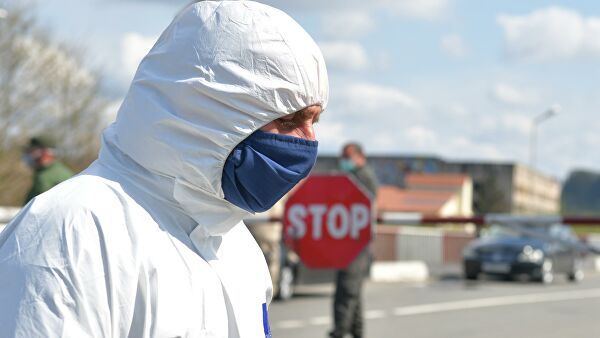
COVID in Abkhazia: Who Is Really a Friend, Who Is an Enemy, and Who Is Simply Neither
21/09/2020 18:07:32 Conflicts
On September 20th, for instance, out of 225 people tested, COVID-19 was confirmed in 61. The republic's only Covid center already has 99 patients, 6 of whom are in serious condition and 14 in a moderate condition.
At the same time, the Abkhazian authorities are concealing the fact that more than 10 severely ill patients have already been transferred from the Gudauta hospital — on whose premises the Covid center was established — to receive treatment in Georgia. The reasons why this information is not being disclosed to the local population are not entirely clear. Some of our interlocutors, however, are convinced that the country's leadership is thereby attempting to soften the fact that Russia refuses to treat Abkhazian citizens — which is why patients have to be sent to Georgia.
"For a long time no one was being transferred to Russia, even though there were very seriously ill patients. Two people were transferred — and both died. There is your truth. Our infected doctors are being sent to Georgia one after another, and not only because the relatives of the sick want it that way. We are being told openly: don't wait for a deterioration in their condition — transfer them to Georgia, because Russia will not treat them," Alexei, a relative of an infected doctor, told us. According to the young man, the staff at Gudauta hospital make no secret of the fact that the situation is very bad. "You listen to the television and it sounds like Russia is helping us. But in reality there is no assistance and no treatment. Medications are in short supply, doctors are lacking. The road to Russia is closed. What are we supposed to do?" Alexei asks indignantly.
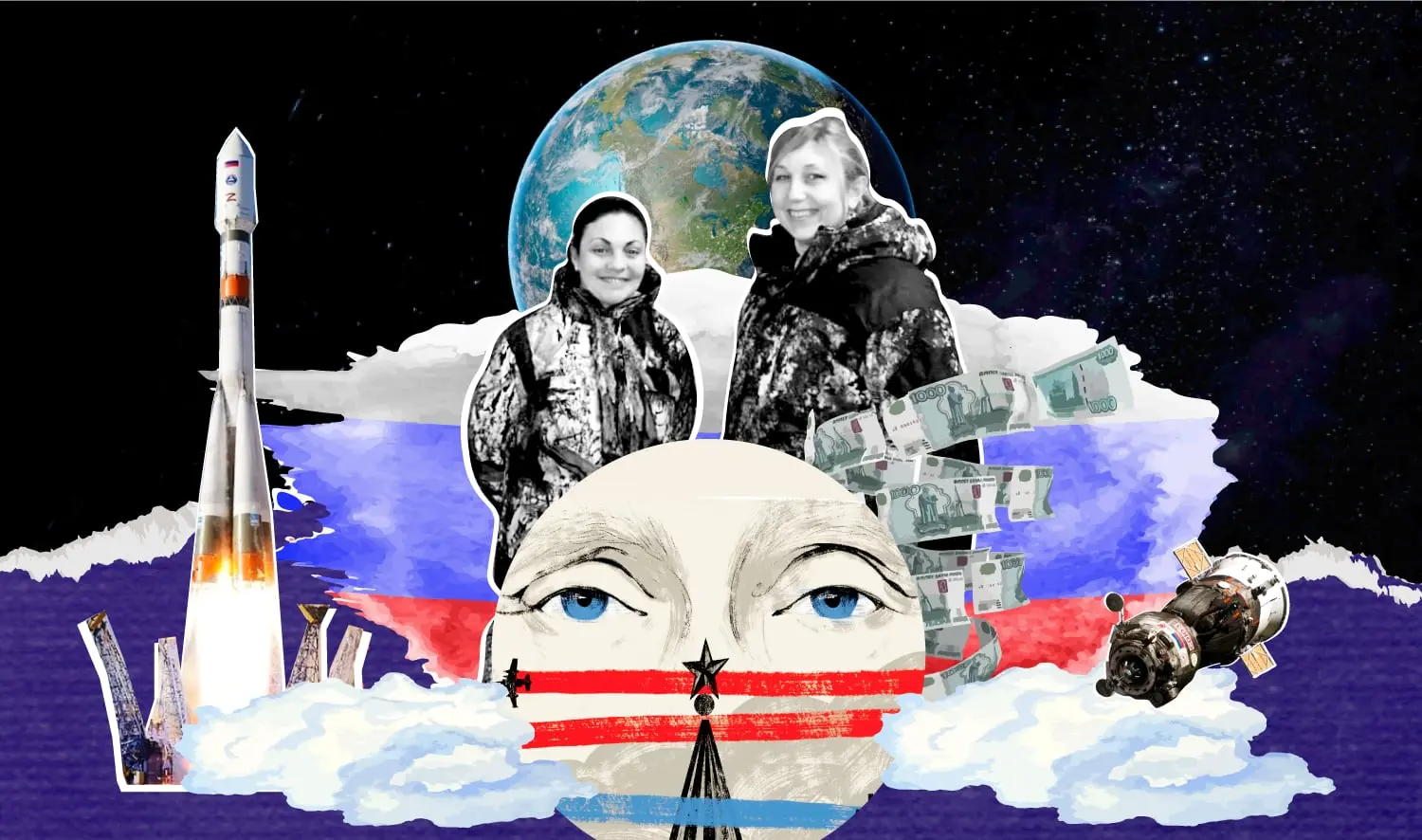
It has become established practice for Abkhazia to conceal not only from its own population but from the entire world its increasingly complicated relations with Russia. Only this time, the authorities don't need to say anything. People see everything for themselves and, what is more, are speaking about it openly. And yet the authorities continue, time and again, to assure us of some wonderful cooperation with Russia, of assistance and support — all while covertly sending their own sick to Tbilisi for treatment.
Such a state of affairs is, to say the least, bewildering — and that is an understatement. Georgia is Abkhazia's enemy, which dreams of bringing the republic back under its jurisdiction. Ah yes, I almost forgot — the Georgia so despised by Abkhazians has still not signed a non-aggression treaty, has not recognized Abkhazia's statehood, and has failed to do a great many other things. While Russia is a strategic partner, neighbor, and friend, who without closing an eye for a single moment thinks day and night about how to help Abkhazia and its residents. Then why is it that we try to save the lives of our own compatriots with our "enemy" rather than our "friend"? Perhaps because each of us understands who is truly a friend, who is an enemy, and who is simply neither.
And before those who have been subjected to various forms of propaganda come at me in search of someone to blame, let me recall a wise saying: a friend is not the one who spreads honey, but the one who tells you the truth to your face. And extends a helping hand.
From Russia we hear only words. Real assistance — zero.
Why am I so fixated on Russia? The reason is that for several decades this state has been speaking about helping Abkhazia. Since 2008 it has been doing so apparently in a fully official capacity, on the basis of agreements, treaties, and a dozen other documents of various kinds signed between two equal states — the Republic of Abkhazia and the Russian Federation. Except that this interaction bears the least possible resemblance to a relationship between full and equal partners. It would be more apt to describe it as the relationship between a master and a servant, an owner and a slave.
You may condemn me for saying it, but I genuinely do not believe that a country offering various forms of charitable assistance to the entire world is incapable of helping Abkhazia during this difficult period for the republic and its people. This is more likely a matter of unwillingness. How else can one explain the refusal to treat Abkhazian citizens in Russian clinics? How does one justify Russia's prohibition on the purchase and export of the medications so urgently needed to save the lives of Abkhazia's residents now — during the acute phase of the coronavirus?
By refusing to treat Abkhazia's residents, and by drawing the republic into financial bondage and an ever-deeper economic crisis, Russia is not building a friendly or a partner relationship. And this truth, I am convinced, is understood by everyone in Abkhazia. Even despite the fierce reluctance to admit it, deep down each of us understands that this is the truth from which there is no escape.
Since the start of the pandemic, those who were particularly skeptical about the virus's existence have radically changed their view. Understandably so — for this is no longer about some unknown sick person in China, Italy, or Russia. Coronavirus has made its way into practically every family, having already claimed the lives of 8 Abkhazian citizens.
Doctors believe that time has been lost. Disbelief in the disease has done its damage. And yet even now, when the danger threatens practically the entire elderly population of the republic, all disabled people and cancer patients, people are still reluctant to leave the streets and continue attending weddings and funerals.
You cannot get enough air to last you through death, as the saying goes. In the current situation, this wise adage takes on a special, ominous meaning. There is a way out, of course. First and foremost, we must understand that the health and lives of our loved ones during this pandemic depend entirely and completely on the civic-mindedness of our population.
Abkhazian medicine is on the brink of collapse. Our doctors, though they try not to speak about it, are — as we all understand — fighting the disease with their last remaining strength. Assistance from Russia, in all likelihood, will not come. And so we find ourselves having to rely on the doctors from across the Inguri, who time and again extend a helping hand to us — without demands or conditions, without publicity or boasting.
Sooner or later, the time will come when the masks are removed. And then we will see who is a true — not an imaginary — friend of Abkhazia. God grant that we learn this before it is too late.
Kristina Avidzba
The text contains place names and terminology used in the self-proclaimed Republic of Abkhazia. Opinions expressed in the publication reflect the views of the author and do not necessarily represent the position of the editorial board.