
Who Created the Paramilitary Fortified Settlements of "Monks" in Abkhazia, and to What End?
15/09/2020 15:43:32 Conflicts
Few people in Abkhazia have failed to notice the UAZ jeeps darting back and forth, driven by people in monastic vestments. Quite frequently, behind the wheel of these off-road vehicles — sometimes of the latest make from the world's automotive industry — one can also see women, likewise in habits, swathed from head to toe in black robes. If in the early years such visitors caught the eye and aroused great curiosity, over time people grew accustomed to their presence in Abkhazia. Except that their numbers have only increased with each passing year, and today these "monks" and "nuns" can be spotted in any corner of the republic — not in its central regions, but on the outskirts of villages, in places remote from the bustle of resort life.
According to unofficial data, approximately 4,000 such "tourists in habits" currently reside permanently on the territory of Abkhazia.
"What is so alarming about this?" any reader of this article might ask. And indeed — is it not a good thing that hermits, pilgrims, and devotees have found shelter in Christian Abkhazia? So it would seem, but not quite.
Seven or eight years ago, their presence in the republic raised no one's concerns. For Abkhazia, scarred by war, these "men of God" could have been a breath of fresh air — a support on the path to spiritual enlightenment, if you will. But there is one major discrepancy that sets everything in its proper place and explains the concern of the republic's population.
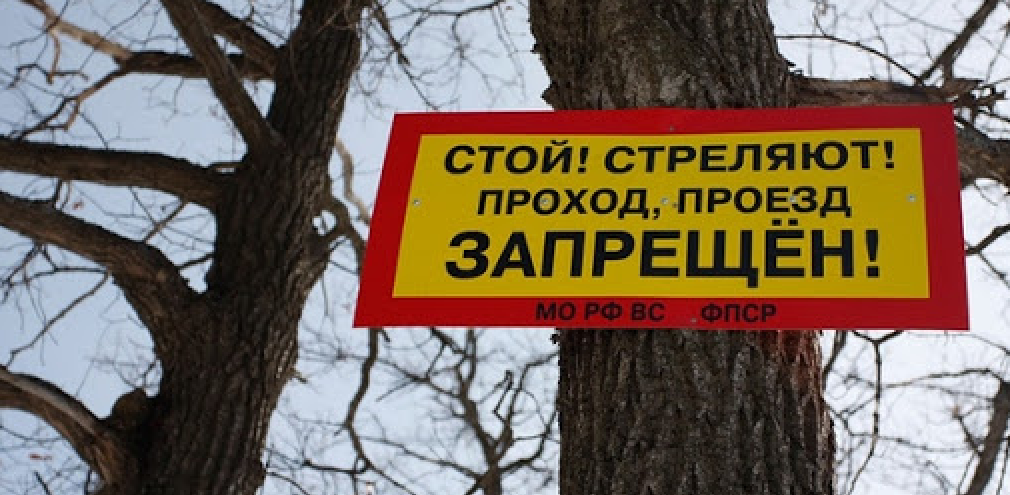
These "monks" have no connection to the Orthodox Church whatsoever. The majority of them are active or recently retired employees of Russia's security services, who have come to Abkhazia not for a leisurely existence or in pursuit of the fairy-tale beauty of its pristine nature. Here they live — or rather, work — each in a particular sphere. Acquiring plots of land, often amounting to several dozen hectares apiece, they have built in Abkhazia fortified settlements onto whose territory outsiders are categorically forbidden to enter. Private property — what is there to say? Except that this private property stretches across dozens of kilometers of Abkhazian land, blocking roads of both national and local significance.
Don't believe it? Try driving to the area around Tsebelda and the nearby villages. At a certain point, an armed sentry will block your road and forbid you from continuing without any explanation of the reasons. You may complain to the Pope himself and threaten divine retribution — you will not be permitted to proceed. If you resist, a patrol with dogs and armed soldiers will arrive, capable of taking you anywhere they see fit. They care nothing for the fact that you are a citizen of Abkhazia and are on your own land. You will eventually be released, of course, but not before spending a day or two in a cell.
All of these "monks," while technically citizens of Abkhazia, enjoy diplomatic immunity. To put it plainly, they are untouchable. Meaning that even if one of these "hermits" shoots you or seriously injures you, the Abkhazian state would not be able to bring any charge against him whatsoever.
"Many years ago, Abkhazian society discussed this question. We even tried to find out who they were and, most importantly, why they were quartered among us — but we couldn't find out anything. The Russian Embassy in Abkhazia chose to stay silent, pretending nothing was happening. And the official Russian authorities did not even deign to respond," recalls our interlocutor Valery.
According to him, these are highly trained specialists, along the lines of "Navy SEALs." In Abkhazia they live with their families.
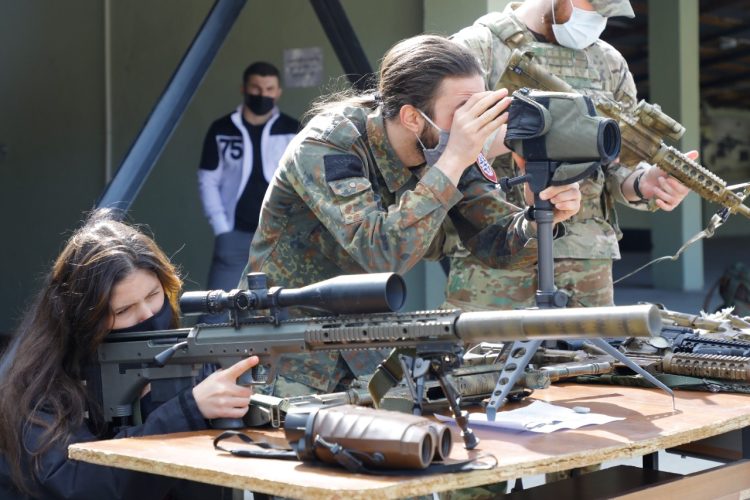
"A couple of years ago I managed to visit them, and I was astonished by how everything was organized there. It is not, in essence, an estate with a garden or vegetable plot, but a mini military base. There are various training apparatuses everywhere for practicing combat skills. And the quantity of weapons of every kind they have — you cannot imagine," recalls Valery.
Our interlocutor shared another unexpected detail. Each such family raises an average of ten to twelve children. The older children follow a daily routine akin to that of a cadet academy, while the younger ones are occasionally permitted to skip training sessions — which, it should be noted, are conducted to standards approximating those of Russian special forces.
"Each family requires a territory of several hectares because the training includes running distances of ten to twelve kilometers. The endurance training is nothing short of extraordinary, and those who perform best are rewarded with trips outside Abkhazia," our interlocutor explains.
And the strangest thing of all: with only a few exceptions, no one there addresses those who are ostensibly their parents as "mum" or "dad" — only by their first name and patronymic.
On the surface, these appear to be utterly wonderful, instructive examples of how the younger generation ought to be raised. Except that one question gives no peace. For what purpose are certain Russians training fighters here, in the remote reaches of the Abkhazian state? For what ends do they require their own small army of supersoldiers?
"When there were five or ten families, I saw nothing alarming in it. What is wrong with families leaving large Russian cities and deciding to live on our beautiful land? But now there are not ten and not even a hundred families. Their numbers are growing so quickly that even with all my naivety I understand something is not right," shared his thoughts Vagharshak, a resident of the Gulripshi district.
According to the elderly man, they do not socialize with neighbors; neighbors know neither their first names nor surnames, nor where they came from before arriving in Abkhazia. Vagharshak did note, however, that they attend church and are frequently seen there by local residents — though they never bring their children, neither young nor older, to the house of God with them.
Immediately after the end of the Abkhazian-Georgian war, the republic's population was preoccupied with the question of security. When the first Russian military base appeared in Abkhazia, many breathed a sigh of relief. A little later, when the number of bases exceeded all conceivable limits, the population began to grumble with discontent. But they were immediately told: "This is necessary — for your own security." Over the years that followed, one after another, conflicts began flaring up connected with Russian military personnel seizing land adjacent to the bases. Those who recall it will remember the enormous scandal caused by Abkhazia's Ministry of Culture in 2017, when it emerged that — without any permission from the Abkhazian authorities — the military border directorate of Russia's FSB in Abkhazia had destroyed objects of historical and cultural heritage at a training ground in Tsebelda.
"This situation has aggravating circumstances," believes Deputy Minister of Culture Batal Kobakhia. "The work was carried out on a public holiday, which in itself indicates that the people understood what they were doing. They could not have failed to know that they were demolishing a ruined site, because the foundation rising approximately one meter above ground level, the remnants of the walls, and the enclosure are clearly visible and are not obscured by vegetation. As for the cemetery — it is a memorial site, and its demolition is only permissible with a special permit."
Furthermore, Batal Kobakhia reported that military exercises had long been conducted on the territory adjacent to the village, causing great inconvenience to residents and posing a threat to their safety: "Livestock frequently perishes there; artillery fire causes the walls of residents' houses to crack. They have repeatedly lodged complaints with the district head, the government, and the military — but received no response whatsoever."
"I don't think our authorities were even informed of such matters — but they could not have failed to notice the growing number of pseudo-monks who more closely resemble people trained to fight. Whatever the case, they were obligated to raise this question with the highest Russian leadership," believes our interlocutor Giorgi.
In his view, inaction could lead to irreparable consequences. "It is clear that they are being prepared for an extraordinary situation — one in which the military cannot officially intervene, for instance in an internal Abkhazian conflict. Such formations are precisely what is needed for such purposes. They are capable of staging a provocation and suppressing a local conflict. Can it really be that no one understands this?" asks Giorgi.
What goes on behind the high fences of these fortified settlements, no one knows — just as no one knows who sets the tasks and finances this entire, far from inexpensive way of life. One way or another, the involvement of senior Russian military officials is beyond doubt. I find it hard to believe that in opening its heart and extending a friendly hand, Abkhazia anticipated falling into a cleverly laid trap set by a friend and strategic partner. It would appear that from the very beginning, Russia regarded Abkhazia and its residents as pawns in its own political games, with no intention of affording it the status of a genuine partner.
And now add to all of this the looting of archaeological valuables by certain "black diggers," the uncontrolled circulation of weapons, and the trafficking of children into and out of Abkhazian territory — and you are left with one enormous question mark. The answers exist and are known not only in Moscow, but also at the Abkhazian-Russian border, through which the pseudo-monks bring into the republic both weapons and children. And since all these affairs remain shrouded in secrecy to this day, someone evidently needs it very much. And it does not look like it is Abkhazia and its residents.
Kristina Avidzba
The text contains place names and terminology used in the self-proclaimed Republic of Abkhazia. Opinions expressed in the publication reflect the views of the author and do not necessarily represent the position of the editorial board.