

The Kremlin's Yellow Political Card to Abkhazia. How Far Away Is the Red One?
14/09/2020 05:38:12 Conflicts
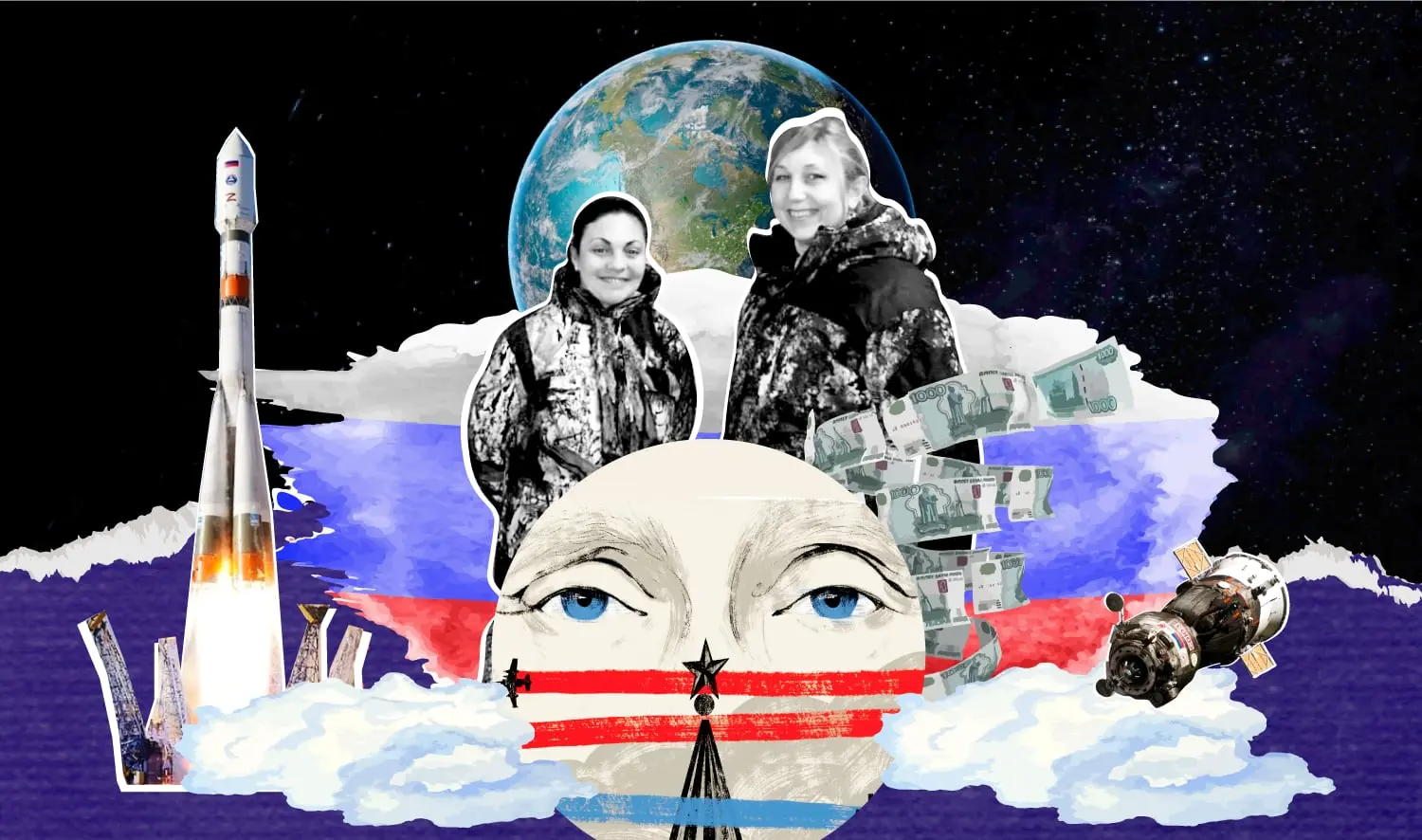
While the world attempts to combat the renewed Covid threat, the Kremlin, as always, is pursuing its designs "under cover of the noise." It apparently considers the timing opportune — if anything goes wrong, there will be few to hold it to account, since everyone is preoccupied with the pandemic, just as they were with the Olympics in 2008. And so the world is already watching the events in Belarus. But why not also wrap up a couple of other matters — easier ones — in places where there is already legal justification on hand, and military bases, for the unlikely but nonetheless possible eventuality?
And so the yellow political card has been shown. At the worst possible moment for Abkhazia, which finds itself in a difficult epidemiological and economic situation. But at precisely the right moment for the Kremlin. I am referring to several statements from Moscow that are disarming in their candor — from the politician Prilepin, then from deputy Zhirinovsky, and finally from the public and political figure Prokhanov. All of them, over recent months, have suddenly been struck by ideas about the "necessity" of annexing Ukraine, Belarus, Abkhazia, so-called South Ossetia, and other unrecognized or partially recognized regions of the post-Soviet space. All of them are odious figures — yet each and every one is considered a "mouthpiece of the Kremlin." It is apparently for this reason that, following Prokhanov's tirades, Sukhumi nonetheless decided to respond officially through a Foreign Ministry statement: "The political status of the Republic of Abkhazia is not subject to revision and is irreversible."
And indeed, how could one not respond? Just consider what Prokhanov put forward in his article "From Tiraspol to Vladivostok":
"Abkhazia and South Ossetia are de facto Russian territories in the Transcaucasus. We do not call these territories Russian out loud, paying tribute to the times, inventing implausible, unrealistic formulas about the sovereignty of these Russian states. Their inclusion in Russia, [...] the realization of the plans for a great Novorossiya, which is of course part of a great Russia [...] — this is the geopolitical model that lives in the minds of thinking geostrategists."
And it is not only the Foreign Ministry that is outraged. Society is outraged to its limits. In the Abkhazian segment of social media these days, one can read things that have never before been stated so bluntly out loud.
Many residents of Abkhazia, it seems, no longer believe the assurances of Russian officials — or of representatives of the previous de facto authorities — that these are the private views of private Russian figures, and not the position of the "friendly" leadership of the "strategic partner." And now Moscow will find it considerably harder to convince the public of this. For the authors of the aforementioned freelance initiatives make no particular secret of the fact that ideas of annexation are actively circulating in the corridors of Russian power as well.
"No one in Russia has proclaimed the concept of a state from Tiraspol to Vladivostok, but this concept, I have no doubt, is being discussed in the quiet of the General Staff, and in the corridors of the presidential administration, and in the Security Council, and in the Foreign Ministry," writes Prokhanov in the same article.
But the issue is not really about him, or Zhirinovsky, or Prilepin, or the statements of other "Kremlin mouthpieces." The issue lies in the demonstrably tangible actions of the Russian authorities themselves toward Abkhazia throughout this entire recent period: the reduction and then complete cessation of financial assistance; the closure of the "border" at Psou on the eve of the tourist season; the medical blockade in the midst of the pandemic; the forcing of Abkhazian pensioners — who represent the highest-risk group — to stand for hours in cramped queues; and the hints, dressings-down, and near-explicit threats to the Abkhazian establishment at closed meetings — which, in all likelihood, were also delivered in recent days in Moscow, at meetings with Abkhazia's "president" Aslan Bzhania.
And if until recently, whenever discontent with Russia arose in Abkhazia, the blame was typically rolled toward "Georgian propaganda" and the official Tbilisi in general — this time neither Russia's "ambassador" Dvinyagin nor anyone else will be able to pin anything on the Georgian side. After all, Tbilisi could not have closed the Psou "border" to Abkhazians, nor could it have cut off Russian funding, nor organized a medical blockade from the Russian side, nor forbidden Abkhazian pensioners — on behalf of the Russian Pension Fund — from using plastic cards. And Tbilisi would hardly hint at unification with Russia, or rebuke Abkhazia for the increasingly vocal ideas of cooperation with Tbilisi that are emanating from Abkhazia itself.
This is one more reason to no longer believe the assurances either of the Kremlin or of the Kremlin-loyal Abkhazian revanchists who hunger to restore the position they once built for themselves precisely through Moscow's favor. Society has begun to trust its own eyes — and to keep them open, both to the Moscow sanctions imposed for the idea of cooperation with Tbilisi, and to the probing of the ground for annexation.
The problem is simply this: as history has demonstrated not once and not twice, when the Kremlin decides to annex something to Russia, the wishes of local residents are of absolutely no interest to it — it simply acts. The opinion of the people is no obstacle to it — in the "best" case it will organize some kind of fraudulent referendum on the spot, and in the worst it will suppress protest by force. Nor is the opinion of the civilized world, in whose eyes it long ago squandered whatever remained of its reputation. Nor even the voices of its own sane Russian citizens, which can easily be drowned out by PR campaigns of the #CrimeaIsOurs variety.
And now, if God forbid events were to develop according to Prokhanov's scenario, Abkhazia would face a full reckoning with what it means to have such a "strategic partner" as Russia.
"All of Moscow's recent actions toward Abkhazia — the cessation of financial assistance, the closure of the 'border,' the effective medical blockade, the pensioners' queues, and so on — are part of the 'repertoire' of preparation for achieving a real objective. And that objective is by no means 'comprehensive assistance' to Abkhazia in becoming a state, developing, strengthening itself, and achieving the well-being of its citizens — it is precisely the annexation of a certain additional number of square kilometers to Russia's vast territory. The majority of Abkhazia's residents are now coming to understand this," believes Paata Gaprindashvili, Director of the Georgian Reform Association.
In his view, the legal foundation for all of this was laid back in 2014 by the so-called major Russian-Abkhazian agreement, which envisaged the merger of a whole series of state structures, including the most vital life-sustaining systems.
"As soon as all of Abkhazia's vital systems come effectively under Russia's control, all that will remain is to wait for the right moment — and the probing of the ground in this direction has already begun. All of this is, of course, unacceptable, as it contradicts the interests and aspirations of the Abkhazian people," says Gaprindashvili.
This view is shared by a great many Abkhazian observers. Moreover, some of them are already contemplating the grim prospect of Moscow achieving its real objective by force.
"Abkhazia has found itself in a very difficult situation. The strategic partner has suddenly decided to move from friendly rhetoric to forced annexation. Along the lines of: 'If you don't want it voluntarily, we'll do it without taking your opinion into account.' But few people are thinking about how events might actually unfold. The residents of Abkhazia would of course not accept such a formulation and would protest. But whether they would succeed — is unknown," says our Abkhazian interlocutor from Sukhumi.
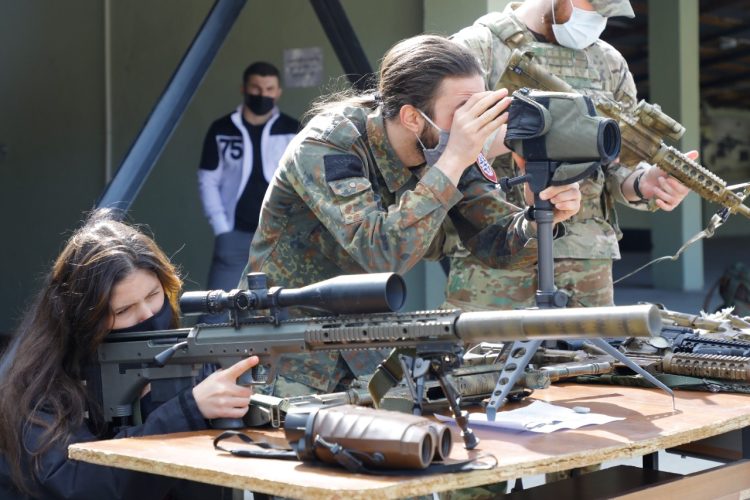
He explains that "in every district of the republic there are Russian military bases equipped with large quantities of modern weaponry and soldiers — and they are positioned not only in areas close to Georgia."
"There are several dozen of them, both in the mountainous terrain and near the Abkhazian-Russian border. Though if one thinks about it, what are they doing there — protecting against Georgians? These forces would nip in the bud any attempts by Abkhazians to resist Russia's policies, to express their opinion about the political lawlessness being perpetrated. And a conflict would ensue — which Russia, in its own justification, would in all likelihood present to the world community as a 'fight against terrorists' or some other such evil. And the subsequent annexation of Abkhazia — as the most humble request of the republic's own residents," believes our Abkhazian interlocutor.
Thus, the realization of the true nature of those "new political realities" that Moscow has been pointing to Tbilisi for the past twelve years with a "recommendation" to "recognize" them — has arrived in Abkhazia. And this comment from an Abkhazian internet user reflects better than anything what is going on in the minds of ordinary citizens.
But the question now is: what is to be done?
"Everything is now in the hands of Abkhazia's leadership, which cannot, and has no right to, surrender its positions. For what is at stake is the future of the republic and its people. Now, more than ever before, it is necessary to speak openly about what is happening and not to hide from one's own people what is being perpetrated," believes our interlocutor from Sukhumi.
At the same time, in his view, "given Russia's incomparably greater political, military, and other power, it is of critical importance for Abkhazia to attract the maximum possible attention of the entire world to what is happening."
"And in this regard, the only force that can apparently help Abkhazia avoid becoming part of the Russian state is Georgia — because the republic simply has no other way of being heard," concludes our respondent from Sukhumi.
And indeed, on whom else is there to count? Which of the countries that recognized Abkhazia would go against Moscow to defend it from possible annexation to Russia? Venezuela, Nicaragua, Syria — perhaps Nauru? For all of them recognized Abkhazia, as is no longer a secret to anyone, at the time in deference to the Kremlin's wishes.
Tbilisi, on the other hand — which does not recognize Abkhazia and regards it as an integral part of Georgia occupied by Russia — has every direct reason to oppose its Russian annexation.
Moreover, in Paata Gaprindashvili's view, this is not merely a reason but "Tbilisi's obligation to the Abkhazian people — to defend their interests and, together with the international community, do everything possible to prevent annexation."
Gvantsa Pipia
The text contains place names and terminology used in the self-proclaimed Republic of Abkhazia.