
Abkhazian Products Can Reach International Markets with Preferential Rights and Free of Taxation
08/08/2020 06:55:54 Conflicts
Political and economic relations are so deeply intertwined that it is practically impossible to consider them separately — especially in the context of conflict regions. When it comes to unrecognized entities and questions of political status, finding depoliticized solutions becomes considerably more complicated. However, the case of Georgia serves as an example that this is not impossible. Various business-related matters — company registration, obtaining licenses, product labeling, tax payments, and so on — are directly connected to conflict-sensitive issues such as acquiring citizenship, becoming a legal entity, and entering into official relations with various state bodies.
In 2018, the Georgian government developed the by now well-known peace initiative "A Step to a Better Future," the purpose of which was to create new economic opportunities that take into account the specific nature of the conflicts on Georgian territory, while bypassing the question of political status. This unprecedented approach was developed on the basis of an analysis of best international practice, and taking into account existing realities, a unique formula was created for which there is no equivalent anywhere. Even in Moldova and Cyprus — where conflict regions within those countries are actively engaged in economic relations and in this sense set a positive example — conducting business through a neutral platform does not occur: the populations of Transnistria and Northern Cyprus conduct business by registering as Moldovan and Cypriot companies and paying taxes to the respective states.
All components of the trade and economic relations created by the peace initiative are completely separated from political matters and are based on a status-neutral approach. As a result, the business process is brought into full alignment with the private interests of individual entrepreneurs.
How is the principle of neutrality achieved?
In order to register as a sole trader or to register a company — which is the foundation of any business activity — a resident of Abkhazia or the Tskhinvali region is not required to obtain a document confirming Georgian citizenship. Using Abkhazian documents and a biometric photograph, through the simplest of procedures and with full confidentiality of personal data, the interested party registers at any House of Justice or public service center and receives an 11-digit identification number — the same kind issued in Georgia to citizens of other countries, stateless persons, persons with a residence permit, and so on. Obtaining an identification number does not obligate the individual to acquire any documents whatsoever. An application may be submitted either in person or in electronic form. The number is issued within 10 days, free of charge. It can be used for company registration, opening a bank account, and various legal and financial procedures.
Using this personal number, a company can be registered at the Public Registry Agency within a single day, including electronically.
A registered company receives the status of a special enterprise and the right to engage in economic activity. A person with this status is exempt from the obligation to pay any taxes — such as value added tax, profit tax, income tax, and so on. Accordingly, in the course of the company's business activity, it is not required to enter into any tax-related relations with the state.
The sale of goods produced in Abkhazia and the Tskhinvali region on Georgian territory is possible on the basis of status-neutral labeling, which involves indicating on the product the city and street of production — and, if desired, in the Abkhazian language only.
In this way, the peace initiative creates a legal and operational environment free from political questions, giving private individuals the opportunity to conduct business without any obligations toward the state.
At the same time, the initiative creates the possibility — with preferential rights and free of customs duties — of importing into Abkhazia high-quality goods produced not only in Georgia but also imported from other countries, including EU member states. In this regard, the import of vehicles and automotive spare parts is of particular interest to businesses. For this purpose, simplified customs and registration procedures are provided near the Inguri bridge.
It is also important that this initiative creates the opportunity for Abkhazian products to access European and regional markets. Georgia has free trade agreements with the European Union, the EFTA countries (Iceland, Liechtenstein, Norway, and Switzerland), as well as Turkey, CIS countries, and China; negotiations with the United States are ongoing. Accordingly, goods produced in Abkhazia gain a unique and real opportunity — through Georgia, with preferential rights and without any tax obligations — to reach international markets, creating a substantial prospect for development and success.
Why is it so important to involve Abkhazia's residents in economic activity?
Half of Abkhazia's financial resources consist of subsidies received from the Russian Federation, which makes the region dependent on it. Financial dependence, on one hand, limits development opportunities and, on the other, gives Russia a powerful instrument of pressure. This dependence has become even more apparent of late, when delays in Russia's transfer of funds made the timely payment of wages and pensions in Abkhazia impossible. Against the backdrop of the global pandemic and falling oil prices on world markets, Russia's own financial situation has deteriorated sharply, making it unlikely that large financial tranches will be directed to Abkhazia in the current or subsequent years.
From a purely economic standpoint, under conditions of annual dependence on subsidies, economic development does not occur. It is impossible without business and entrepreneurial activity, which are carried out by individual persons and companies. The peace initiative "A Step to a Better Future" is designed to promote the development of business activity and financial mechanisms — including through one-time grant assistance for starting economic activity and the encouragement of start-ups — which will have the potential to develop without subsequent assistance or subsidization. The goal, therefore, is to create self-sufficient and sustainable economic actors. Such continuous entrepreneurial activity will form the foundation for the recovery and development of Abkhazia's economy.
Abkhazian society understands this perfectly well — and so now does the new de facto government. Over the past few months, views in favor of dialogue and expanding relations with Tbilisi have been expressed regularly, with particular emphasis placed on the necessity of trade and economic relations. This topic has become the subject of wide discussion in various circles — which is not at all surprising. Given the difficult socio-economic situation of Abkhazia's population, making use of the economic opportunities and prospects created by Georgia is a rational interest — all the more so since this opportunity is not linked to the question of political status and is directed solely at the benefit of the population.
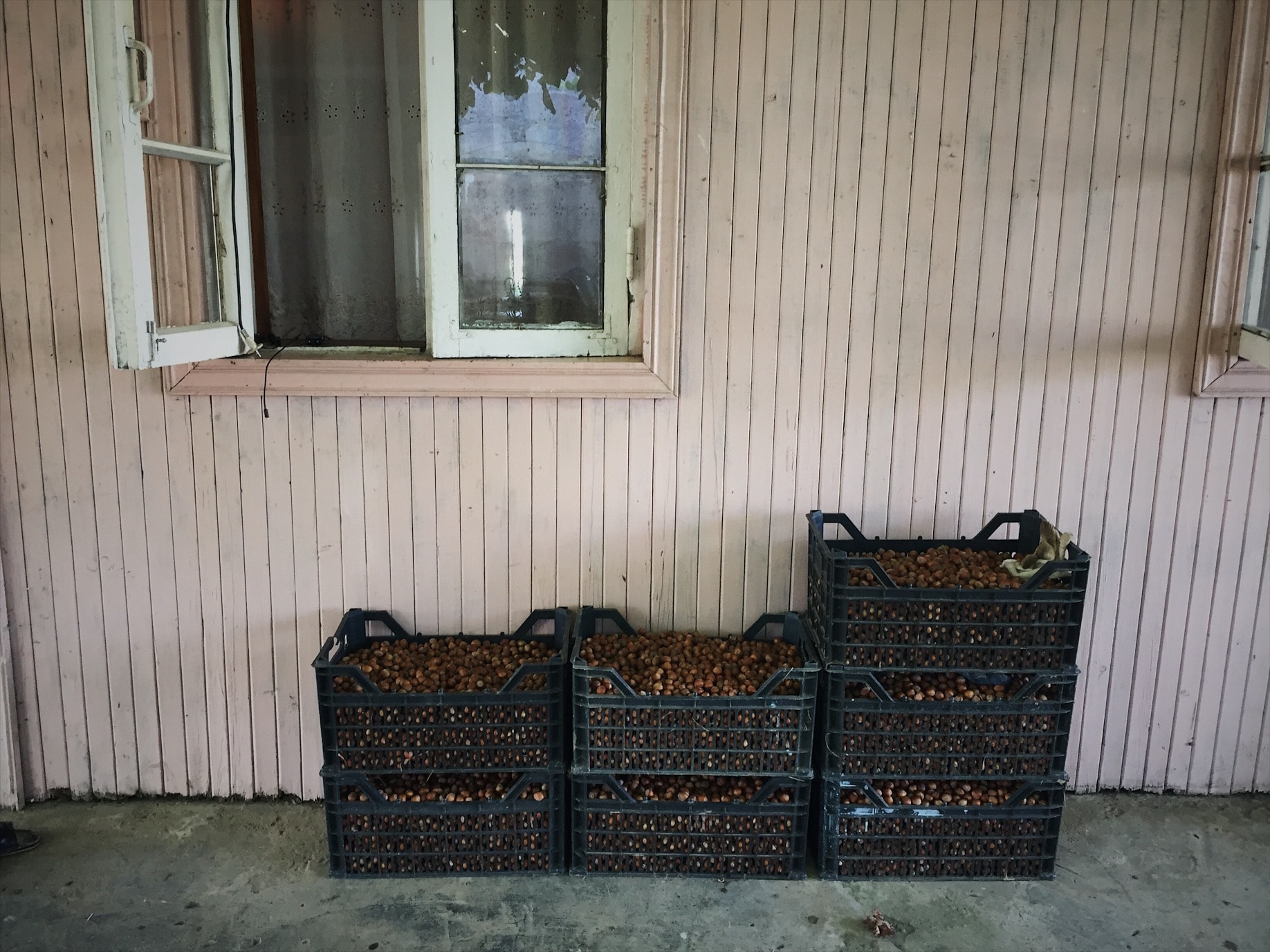
Interest in this initiative among Abkhazian society and business circles has existed for some time. This was confirmed once again following the launch of the small grants program included within it — "Produce for a Better Future." Interest in participating in the program and starting business activity was expressed across all districts of Abkhazia, and an unprecedented number of applications was received. The business plans covered various areas of agriculture, including poultry farming, livestock farming, dairy production, hazelnut processing, the establishment of incubators and greenhouses, as well as beekeeping, winemaking, the processing of iron, wood and other materials, and a range of production and service sectors. In the first phase of the program, 20 successful projects were identified, with a total of 500,000 lari allocated to them. Given the high level of interest, the program has been continued in the current year as well.
Even at the stage of developing the initiative, in the format of various closed meetings, Abkhazian participants confirmed the necessity of developing trade and economic relations, as well as their interest in participating in this process. Of particular importance to them was that the initiative: a) create a neutral framework for business activity; b) not obligate them to accept Georgian citizenship; c) maximize the exclusion of the need to engage in corrupt transactions by exempting them from tax payments; d) create an alternative to the Russian market and a chance to export their products to international markets; and e) provide at least some modest financial resource for start-ups. The peace initiative "A Step to a Better Future" takes precisely these priorities into account.
Against the backdrop of the crisis triggered by the global pandemic and the restrictions it has imposed, improving the socio-economic conditions of the population takes on special significance. Alongside caring for people's health, it is necessary to address their deteriorating economic situation and provide them with appropriate support. In this context, supporting the opening and development of businesses is the most effective and sustainable instrument available, with no alternative. This is precisely why the full-scale implementation of the Georgian government's peace initiative and the creation of a positive environment for economic relations between people is of vital importance. This requires ensuring freedom of movement and supporting trade without any political dimension. The unique neutral platform created by this initiative is a means of achieving the economic well-being of Abkhazia's population and for this reason should be firmly in that population's best interests. It must be borne in mind that overcoming the financial crisis is only possible through the adoption of the right political decisions.
Tamar KochoradzeHead of the Department of Analysis, Policy Planning and International Relations, Office of the State Minister of Georgia for Reconciliation and Civic Equality
Opinions expressed in the publication reflect the views of the author and do not necessarily represent the position of the editorial board.
The material was prepared as part of a joint project of the Accent news agency and the non-governmental organization GRASS, implemented with the financial support of the Embassy of the Czech Republic in Georgia.