
The Hand of "Strategic Assistance" — A Tale of How Russia Subjected Abkhazian Pensioners to Natural Selection in the Midst of a Pandemic
05/08/2020 10:40:52 Conflicts
A new scandal is brewing in Abkhazia. This time, the cause of widespread public outrage is the policy of the Russian Pension Fund — a policy that no one describes as anything other than barbaric. The substance of the matter is, on the surface, quite respectable: Russia wishes to recover funds stolen from it. But the method it has chosen to achieve this goal is remarkable in its own right.
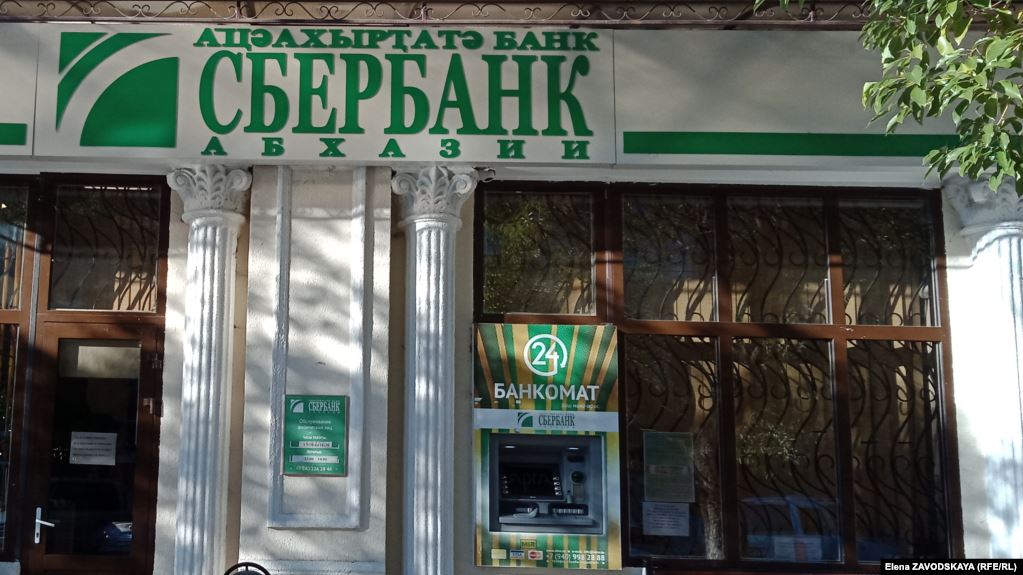
During the acute phase of the coronavirus outbreak in Abkhazia — when the Covid center is overflowing and dozens of people are infected — the Russian Pension Fund has tightened the rules for disbursing pensions to Abkhazia's residents. The Russian institution demanded that Abkhazia's leadership abolish plastic payment cards and revert to the system of cash distribution at savings bank branches — a system no longer used anywhere else in the world. From now on, pensioners — who belong to the highest-risk group — are forced to stand in enormous queues at savings banks in order to collect their hard-earned rubles. And as we all understand, any talk of the social distancing, protective measures, and other important WHO recommendations so essential during a coronavirus pandemic is entirely beside the point here.
In the middle of a pandemic, when elderly people need to self-isolate in order not to perish from a disease that is killing people the world over, the Russian Pension Fund is driving them out into the streets. Such harsh treatment of people who bear no responsibility for the Russian pension institution's multi-million-ruble losses can only be interpreted as an attempt to pressure Abkhazia — or, at worst, as a desire to reduce its population, which, it should be noted, costs the Russian budget a rather considerable sum.
According to official information, the cause of these drastic measures was a "strong recommendation" from the Russian Pension Fund to transfer pensioners receiving pensions from card-based payments to manual cash disbursement at branch counters. There is a debt of more than 16 million rubles, and the Russian Pension Fund, as the primary administrator of these funds, demanded that pensioners henceforth collect their pensions not through ATMs but in person at bank branch counters, with identity documents.
"Transferring all — I repeat, all and simultaneously (!!!) — accounts from electronic to paper-based will inevitably lead to gridlock, confusion, crowding, and a further deterioration of the already unhealthy socio-political climate in the republic," says Abkhazian civic activist Astamur Kakalia. On his Facebook page, he laid out step by step the situation in which Abkhazian pensioners will be forced to collect their Russian pensions.
"After the transition to plastic cards, around 2016, mass staff reductions were carried out at all Sberbank branches. Even before those reductions, there were queues and long waits at the counters. In other words — 15 tellers are serving 6,000 pension accounts and you already have queues. Now imagine 5 tellers serving 6,000 accounts — how much longer will the queues get?!" asks Astamur Kakalia.
If Russia genuinely cared about the well-being and health of Abkhazia's residents — even if only those who are its own citizens — it would not be acting by such draconian methods, experts believe.
In Astamur Kakalia's view, "the prudent and safe course of action — financially as well — would be to organize a more effective system for reporting the deaths of pensioners, a more flexible system of oversight and accounting, but not to transfer — or at the very least, not to transfer all at once — from plastic cards to paper-based accounts."
"In short — if you have a splinter and your finger has become infected, you need to clean the wound; there is absolutely no need to amputate the arm," says Kakalia. And Russia, it would appear, is doing precisely that — though not amputating an arm, but cutting short the lives of more than 30,000 elderly people.
The whole murky affair surrounding the mysterious disappearance of Russian pension funds began a couple of months ago. Yet for some reason, Russia chose to take decisive action only once the Covid-19 epidemic had broken out in Abkhazia. In South Ossetia, for instance — where the situation regarding pension payments is entirely identical to that in Abkhazia — the friend and strategic partner has taken no such radical measures. What is more, Russia has still not put its own house in order on this issue. The Russian Pension Fund reports annually on hundreds of millions of rubles appropriated by unscrupulous individuals within the country itself.
Meanwhile, Abkhazia — which had, through its own efforts, been bringing its banking system into at least some semblance of those of civilized countries — has once again been thrown backward into a far from glorious past. And this, thanks to the efforts of a strategic partner with whom Abkhazia has, let us not forget, signed two inter-state agreements and a dozen treaties on support, assistance, and mutual respect. If this is what that much-vaunted assistance looks like, the question arises: with friends like these, does Abkhazia even need enemies?
As of today, the Russian Pension Fund lists 30,719 citizens of the Russian Federation permanently residing in Abkhazia and receiving a Russian pension. Following the introduction of these harsh pension sanctions, the number of pensioners will in all likelihood decrease. One can only hope that this is not, in fact, the primary objective of the large neighbor — which has, of late, so disgracefully altered its attitude toward the state it itself recognized, and toward the citizens who inhabit that state.
Astanda Bgamba
The text contains place names and terminology used in the self-proclaimed Republic of Abkhazia. Opinions expressed in the publication reflect the views of the author and do not necessarily represent the position of the editorial board.