
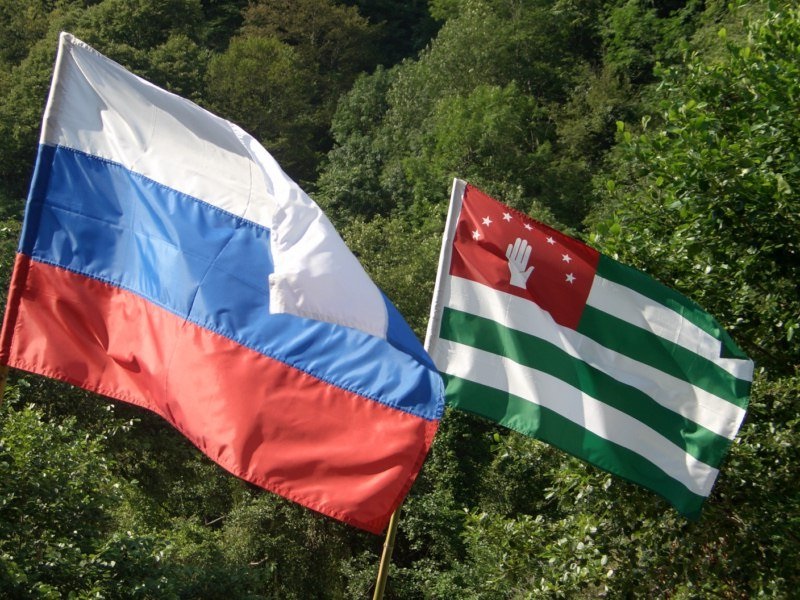
"Russia Is Deliberately Killing Our People" — The Appalling Fruits of Russia's "Care" for Abkhazia
31/07/2020 15:07:22 Conflicts
Abkhazia's system of governance is difficult to suspect of active, constructive work, since over nearly 28 years of sovereignty it has failed to accomplish much of what is an essential precondition for state development. What is more, for the past 15 years it has been doing things that pose a threat to national security — the result of which was the ousting of the two most recent presidents. And to the question — why do you do this, but not that? — one frequently hears the answer: "the Russians are forcing us," or "the Russians won't allow it." And this is said in relation to matters that are vitally necessary for the state and the nation, such as the sale of real estate to Russians (to which they are allegedly being coerced) and the creation of a national currency (which is forbidden).
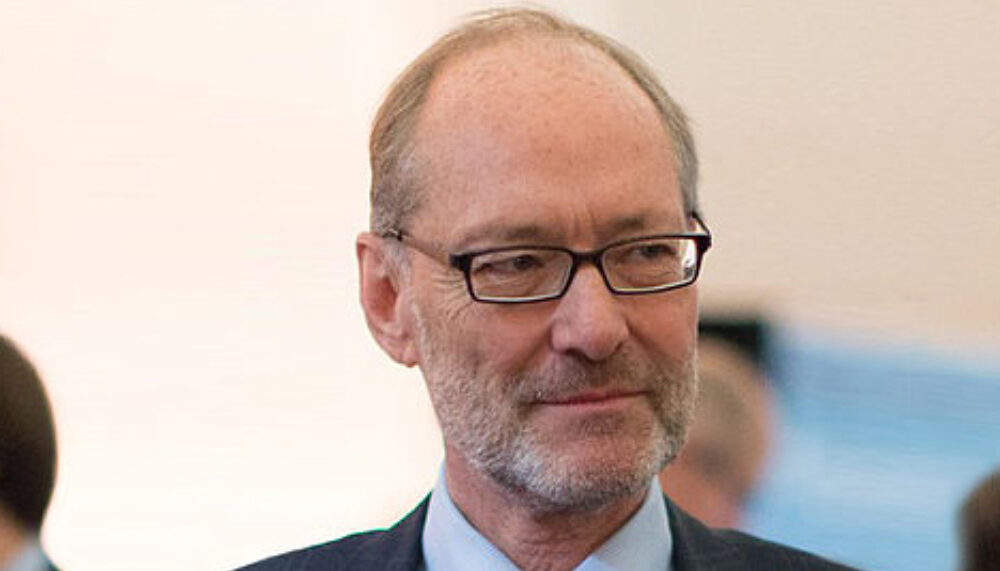
All of this is described in the simplest possible terms — and, most importantly, in terms that are easy to grasp. And before my fellow citizens, zombified by years of Russian propaganda, come at me with accusations, let me clarify: these are not my words, but those of Anatoly Otyrba, a highly respected Abkhazian economist and public figure.
One may feel however one likes about Russia — while simultaneously receiving its pensions and benefits, and enjoying its privileges and numerous other advantages — but the fact that Russia is advancing its interests in Abkhazia, and that all its residents will remain under the weight of this lobby, is indisputable.
Twelve years have passed since Russia recognized Abkhazia's independence. Before that, the powerful neighbor, when it offered assistance to its tiny partner at all, did so only unofficially. But since August 2008, everything has changed.
The recognition of Abkhazia as an independent state placed a host of obligations on Russia, including those relating to the republic's development. Over these years, dozens of treaties and inter-agency agreements have been signed, the primary aim of which is to strengthen Abkhazia on a democratic path of development.
The most important agreement of all those mentioned is the Treaty on Alliance and Strategic Partnership. This multi-page document was signed by the leaders of the two countries in 2014 and covers numerous spheres of cooperation. The majority of its provisions are directed at "developing bilateral, equal, and constructive relations with the aim of achieving a qualitatively new level of regional security, alliance, and strategic partnership" — quite sweeping and ostensibly very serious. But in practice, virtually every article of this treaty concerns military, customs, law enforcement, and banking matters. There is not a single clause about development; instead, it largely concerns Russia's rights and Abkhazia's obligations. The primary directions of strategic partnership — in what I repeat is the most important bilateral agreement — are defined as "coordinated foreign policy, a common defense and security space, a common social, economic, cultural, spiritual, and humanitarian space, and Abkhazia's full participation in integration processes initiated or facilitated by Russia." The emphasis falls squarely on military cooperation. And notably, there is not a word about democracy or the development of Abkhazia's state institutions.
But this agreement was preceded by another document, signed in the Kremlin back in September 2008 — the Treaty on Friendship, Cooperation, and Mutual Assistance between the Russian Federation and the Republic of Abkhazia. There, alongside the military dimension, it speaks of "a commitment to achieving a high degree of economic integration of Abkhazia and the adoption of measures to unify energy and transport systems" — though without any specifics. It remains unclear what exactly Russia intended to do under the treaty: change things, develop them, or simply maintain them. And once again, this document contains not a single word about the democratic development of the Abkhazian state — no indication whatsoever that Russia, as one of the world's largest countries, which has long proclaimed a democratic path of development not only for itself but for those with whom it is allied, would offer its tiny neighbor support and assistance along this path.
Both documents, however, are replete with grandiose phrases such as: "no later than 3 years from the date of entry into force of this Treaty, shall implement a set of measures to align its budgetary legislation with the legislation of the Russian Federation"; and "shall implement a set of measures to harmonize its legislation in the field of customs with the acts governing customs regulation constituting the law of the Eurasian Economic Union, and in parts not regulated by such law — with the legislation of the Russian Federation." All of this is served up under the guise of "strengthening friendly relations, developing multifaceted cooperation, alliance, and strategic partnership between the Russian Federation and the Republic of Abkhazia, which serve the national interests of the peoples of both countries."
Twelve years have passed, I remind you. During that time, Russia has engaged in a kind of patronage — keeping Abkhazia financially afloat. Only a handful of areas have seen any change, and those were areas to which Russia allocated multi-million-ruble loans to the young state. Not wishing to make unfounded claims, we sifted through a great many documents of various kinds, and were still unable to find a single one of any significance that spoke of development, even in the distant future.
"Under current conditions, the nation is not only failing to develop — it is degenerating, and accordingly perishing. And this is happening largely due to the absence of money. The primary cause of this poverty is the absence of a national currency. And to the question — why don't you create one? — comes the answer: the Russians won't allow it. If one overlays this prohibition onto President Bzhania's statement about being coerced into selling real estate to Russians — a process that carries the threat of assimilation — the conclusion follows that Russia is deliberately killing our people," believes Anatoly Otyrba. In his view, our own leadership is more to blame for this state of affairs than Russia's. "The fact of the matter is that on questions that are vitally important for the country and the nation, our leadership should long since have had an established, legally grounded position, backed by programs for resolving them — programs under the implementation of which our president could make a justified request for funds from his Russian counterpart. It is with him that questions of this magnitude should be discussed, not with crooked officials of the Surkov variety. But our authorities have never had such a position or such programs, and as a result Abkhazia has found itself in the humiliating role of Russia's poor relation. Moreover, this condition has persisted for so long that the role of a parasitic state has become the norm not only for our officials, but for the majority of citizens as well," Anatoly Otyrba is convinced.
Dozens of programs carried out by Russia — including investment programs — are ostensibly aimed at the formation and strengthening of the Abkhazian state. And yet somehow, over many years, the republic has only slid backward, straight toward a primitive communal order. There is no sign of development here whatsoever.
Despite numerous examples and the experience of a dozen countries around the world, Abkhazia cannot seem to climb out of the pit and begin a path of genuine progress. And is it even possible? Can a state in which all security structures — the army and the police — are funded from the budget of another country be considered fully sovereign? And can one claim that Russia, by interfering — however plausible the pretext — in the internal affairs of another country, is caring for that state's future? Even if that were so, the excessive "care," which more closely resembles dependency, has yielded nothing but appalling results.
"Assessing the situation in Abkhazia as it stands today, it is clear that without a substantial improvement in the quality of governance, society will continue to degenerate and the state will continue to lose what remains of its political sovereignty. A moment has arrived in the life of the Abkhazian people when it must, without delay and with maximum responsibility, begin the actual construction of a state," believes Anatoly Otyrba.
But is this possible under such enormous pressure and Russia's evident unwillingness? And the issue is not only Russia's unwillingness to see a strengthened Abkhazia at its side. The problem runs deeper. Abkhazia cannot look to its large neighbor as a model of democracy. There is no point in doing so — and I will explain why.
A democratic state is one whose structure and activities correspond to the will of the people and to the universally recognized rights and freedoms of persons and citizens. The source of authority and legitimacy for all organs of such a state is the sovereignty of the people. Well-known words. But it is not sufficient merely to proclaim a state democratic — totalitarian states do this too. What matters is ensuring the state's structure and activities are backed by appropriate legal institutions and real guarantees of democratic governance. And Russia itself has serious problems in this regard. Everyone knows how Russians live, what rules govern life in the major centers and in remote corners of the country. Democracy is nowhere to be found. So can a state that has itself been unable to apply democratic principles to its own development help anyone else do so? I think not. And everyone reading this material knows it.
"One of the main causes of the degradation of Abkhazia's system of governance and its economy was the poor-quality legal framework created at the initial stage of state formation. The principal error embedded in the foundational document — the Constitution — was the absence of any doctrinal aim or strategic objectives, without which there is no benchmark against which to measure new laws for conformity, causing many of them to fail to serve the national interest. And in the absence of a goal, and consequently of a path, society and the authorities have for a quarter of a century been treading water, degenerating and losing the state's standing in the eyes of the rest of the world," believes Anatoly Otyrba.
And the strategic partner has only made the existing state of affairs worse. Everything that has happened up to the present can be explained by only one thing: Russia does not care about Abkhazia. Manipulating a weak strategic partner is always easier — especially when you have spent decades convincing it that there is no alternative to friendship with Russia.
Astanda Bgamba
The text contains place names and terminology used in the self-proclaimed Republic of Abkhazia. Opinions expressed in the publication reflect the views of the author and do not necessarily represent the position of the editorial board.