
"I Don't Care How People Live in Russia" — Why Abkhazia Supported the "Putin-2036" Project and What It Will Bring
13/07/2020 09:48:59 Conflicts
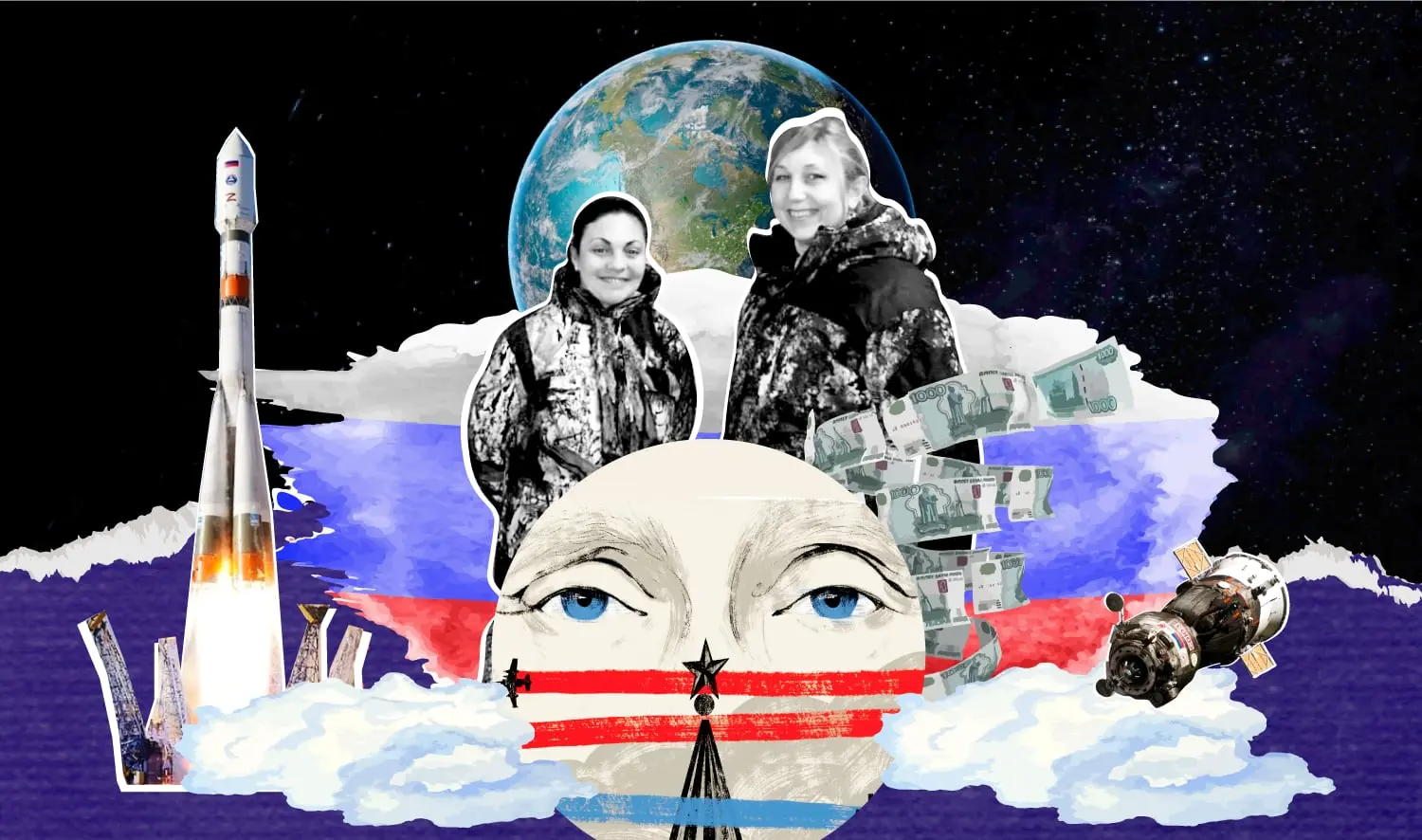
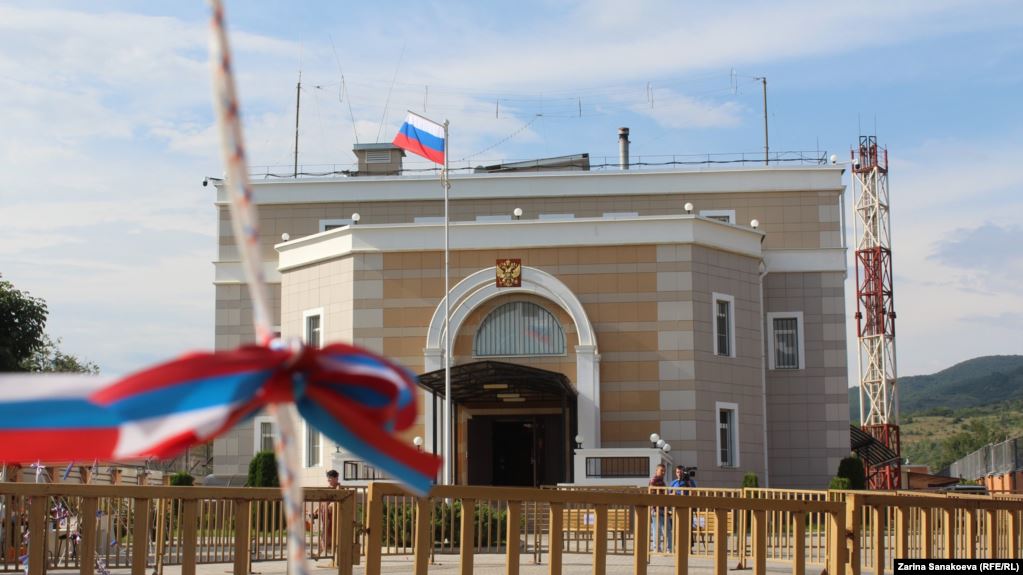
If official figures are to be believed — highly dubious ones, but figures nonetheless — the Russian constitutional amendments allowing Putin to rule until 2036 were enthusiastically endorsed not only in Moscow, but also in Abkhazia and "South Ossetia," or rather, by the Russian citizens residing there.
According to Russia's Central Election Commission, for instance, 78% of voters in Russia itself voted in favor of the amendments; in Sukhumi the figure was 66.75%; and at three polling stations in "South Ossetia" — 82.57%, 97.29%, and 94.26% respectively.
The figures published by Russia's Central Election Commission and those of the "RF Embassy in Abkhazia" differ significantly: according to the "embassy," the number of Abkhazia residents who supported Putin's constitutional amendments was 2,722 (92.15%), those who voted against — 171 (5.79%), with 61 ballots declared invalid; while the CEC's figures read as follows: 5,517 (66.75%), 2,631 (31.83%), and 117 ballots thrown out.
Though against the backdrop of numerous other, to put it mildly, questionable facts pointing to falsification, this discrepancy perhaps no longer matters much.
More important and more interesting are the reasons that led people to vote for these monstrous amendments — ones entirely incompatible with the developed statehood of the 21st century.
"If power in Russia changes hands, who knows how the new force will treat Abkhazia? What if it refuses to pay us our pensions and salaries? At this point, I find it extremely difficult to imagine our state existing without Russia's assistance," explains Alina, who works at one of Abkhazia's state institutions, justifying her choice.
"As Russian citizens, we are obliged to vote. To those who resist this so strongly, I would like to ask: what were you thinking when you took Russian citizenship? That is a very serious decision. Abkhazia was content with the arrangement for many years — and now, suddenly, we're offended! There's no need for that. If you accepted citizenship, then from now on we are Russian citizens, and we must vote as citizens. Those who don't want to do this, I suggest they renounce their citizenship and continue beating their chests while waving their Abkhazian passports," says Maria G.
"It is vital for all of Abkhazia that Vladimir Vladimirovich Putin retain the presidency of Russia. As long as he is president, nothing threatens Abkhazia. And if voting is what it takes, I will do it every single day," insists Said A.
"Russia has proven its help and support many times over. So what if we went to a referendum. Are we not Russian citizens? We have the right to vote in Russian elections and we will do so as many times as necessary! If Putin wants to be president 100 times over, I will vote for him. I don't care how people live over there in Russia — what matters is that Putin doesn't leave," says Naala Sh.
Those who turned out at polling stations in "South Ossetia" were motivated by similar reasoning. Local political analyst Vyacheslav Gobozov is convinced that voters were driven specifically by the provision of the constitutional amendments that is most actively opposed in Russia itself — the resetting of Putin's presidential terms:
"This particular provision is what matters to Ossetians. The extension of Putin's rule means, for us, the preservation of the status quo. We know with certainty that under him, Russian policy toward South Ossetia will not change — no one will hand us over to Georgia, no one will take any steps against our national interests. In South Ossetia, the fear still persists that so-called liberals, who lobby for the 'return of Crimea, Abkhazia, and South Ossetia,' might come to power in Russia. It is precisely this fear that prompted Ossetians to vote for the extension of Putin's rule."
There are, of course, those who think differently.
"If we — the people living in Abkhazia — are obliged to support Russia whenever it needs us, then why shouldn't we express our opinion on its constitution? If Russia pushes itself even further away from the modern norms of statehood, that will affect us negatively as well. Frankly, I cannot imagine how this period will be described in history textbooks thirty or forty years from now, or how these constitutional amendments will be explained to future generations. Every conceivable and inconceivable norm is being violated here. And this concerns us too — Abkhazia and the Russian citizens living here," says Liana, a history teacher from Sukhumi who voted against Putin's amendments.
"More than anything, I would like to be wrong and, together with everyone else who supported Putin's amendments, to soon witness positive change — falling prices, maximum transparency in public spending, the release of all political prisoners, amnesty for those convicted under comparatively minor statutes, relief for the socially vulnerable from the punishing interest rates on unconscionable bank loans, reform of our rotten judicial and other systems — all of which could have been done long before now. There should be no people starving alongside fat oligarchs in our country. I am for peace throughout the world, and against any form of fascism," writes Ossetian civic activist and human rights defender Fatima Margion on social media.
Her post was supported by many commenters.
And yet, unlike a significant portion of the population of Russia itself, people in Abkhazia and "South Ossetia" genuinely went to the polling stations and genuinely cast their votes in favor of the amendments — more widely known as "Putin-36" — despite a clear awareness of just how "democratic" Putin's rule has been and how it affects the population not only of Russia, but of Abkhazia and "South Ossetia" as well, where the Kremlin exercises effective control. This indicates that for the populations of these regions, democracy and citizens' rights are not the priority right now — other matters take precedence.
Meanwhile, the Russian authorities demonstrated what purpose lay behind this entire constitutional spectacle — and how they intended to use the carte blanche voluntarily gifted by Abkhazia and "South Ossetia" — just a couple of days after the new constitution was adopted. Symbolically, the very first piece of legislation submitted to the State Duma following the adoption of the amendments was directed not at improving, for example, the social welfare of citizens, but at expanding and reinforcing the repressive elements of Russian law.
"Despite the fact that on July 1st only amendments to the text of the 1993 Basic Law were adopted, virtually nothing remains of the old Russian constitution with all its declared liberal norms and civil rights. The country has received a new one — Putin's 'constitution of ideological conformity,'" argues Russian political analyst and publicist Fyodor Krasheninnikov.
Furthermore, this legislative bill — which is to be passed in all three readings before the end of July — envisages, among other things, an expansion of the notorious statute on extremism. In particular, on the basis of the constitutional amendment prohibiting "the alienation of, or calls for the alienation of, any territory of Russia," any viewpoint on the question of Russia's borders that diverges from the Kremlin's could, in effect, be declared criminal.
What relevance does this have to, say, Abkhazia? For now, apparently none. And yet this amendment has struck many in Sukhumi as highly significant — a city that for the second week running has been agitated, offended, and outraged by yet another statement from Moscow regarding "the urgent necessity of Abkhazia's accession to Russia."
"We fought for freedom and independence. Anyone who wants to attach themselves somewhere or reunite with someone is welcome to go wherever they wish to be attached. The status of our country is not up for discussion — let Russia engrave that once and for all. And we should not be voting for anything. Why should Abkhazians vote on changes in Russia? What is this? They gave us citizenship — and now we're supposed to vote even against our own freedom and independence? Have you ever heard such nonsense anywhere in the world? Does this exist in a single country on earth?! This speaks volumes! They will sell us out, and we'll have even voted for it ourselves!" fumes war veteran Aslan T.
Irina Bakradze
The text contains place names and terminology used in the self-proclaimed republics of Abkhazia and "South Ossetia."
Opinions expressed in the publication reflect the views of the author and do not necessarily represent the position of the editorial board.
The material was prepared as part of a joint project of the Accent news agency and the non-governmental organization GRASS, implemented with the financial support of the Embassy of the Czech Republic in Georgia.