
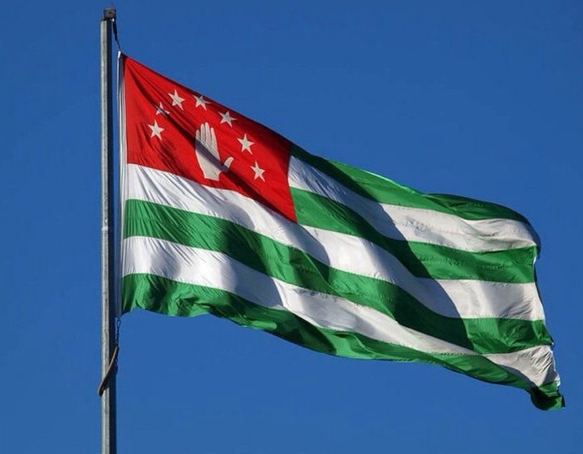
On the Brink of Collapse: How Does Abkhazia Plan to Survive?
01/07/2020 14:19:27 Conflicts
The global coronavirus pandemic has undeniably upended the normal way of life for many countries. Abkhazia was no exception. However, the problems caused by COVID-19 — which other countries could resolve with minimal effort — turned into a genuine catastrophe for this republic. Fortunately, not in the medical sphere: healthcare managed to cope quite well with a small outbreak, localizing the spread of infection in a timely and professional manner.
Like many countries around the world, Abkhazia introduced a state of emergency and quarantine measures even before the first cases appeared. Both borders were closed, as were all shops and entertainment venues. Public transport was halted entirely. The population was urged — and later compelled, sometimes with limited success — to self-isolate. The government tried by every available means to protect its citizens.
Since the end of March of this year, the entry of citizens into Abkhazia has been strictly regulated. While the local population didn't react too sharply to these restrictions during the spring months, by early summer complaints against the country's leadership grew increasingly frequent — by closing the borders, the state had deprived people of the ability to earn income during the resort season. It is worth noting that the two main pillars of the country's economy are agriculture and tourism. While the former has taken a back seat in recent years, tourism, by various estimates, employs between 59% and 73% of the population annually. The result: a third of Abkhazia's residents have been left without work or means of subsistence.
As is well known, trouble never comes alone. Financial hardship and unemployment were only the beginning. Hard on the heels of tourism workers came bankers, financiers, and entrepreneurs, all speaking out about their unbearable situation.
At one press conference, Abkhazia's Finance Minister Vladimir Delba announced a new procedure for pension payments, as "the budget shortfall had already reached approximately 109 million rubles." In plain terms, the population faces delays in wages, pensions, and social benefits.
From there, things followed a familiar downward spiral. By today, Abkhazia stands on the threshold of economic collapse — a conclusion now being voiced openly by experts at every level.
The head of the National Bank, Beslan Barateliya, recently stated: "Abkhazian banks are trying to survive." This situation, under conditions of restrictions and closed borders, only further worsens the position of entrepreneurs who, belts tightened and teeth clenched, have been scraping by for quite some time. Their calls for government assistance continue to be ignored — the state is unwilling to grant even temporary relief from predatory loan interest rates or import VAT during the pandemic.
Former Deputy Minister of Economy and economist Anna Adleyba confirmed the severity of the problems in the banking sector — a powerful engine of market reform: "The banking system is a business that depends directly on the conditions the state must create by building institutions at each stage of economic development. Because the National Bank of Abkhazia is not an issuer — meaning it does not issue securities, banknotes, or other assets — it cannot raise funds for its own development. This is one of the fundamental problems preventing Abkhazia's banking system from growing and flourishing, which in turn prevents it from developing the entrepreneurial sector, and indeed the economy of Abkhazia as a whole."
The country, which for months had been looking to the opening of the resort season as a lifeline, has become deeply demoralized. No money means no food, no drink, and for many, no shelter. Entrepreneurs, whose sales volumes have fallen to a critical 7.4%, lament that doing business in Abkhazia is becoming impossible. They cannot simply shut down and go home — responsibility toward hundreds of employees, and loans taken out for business development and expansion, hang over them like the Sword of Damocles, threatening not only themselves but their guarantors and their homes. And while there was once some hope of accessing the market of Russia, Abkhazia's strategic partner, even that dream must now be abandoned. While the government searches for a way out of this crisis, entrepreneurs — along with the banking sector and the population at large — are simply trying to survive. Or rather, to hold on.
"How do we repay loans the state issued at 36% and 48% annual interest? What will happen to us? The situation is terrible, but not hopeless," says entrepreneur David Pilia. Business representatives believe that one option worth considering is opening the border with Georgia, through which Abkhazian goods could reach not only Georgian markets but foreign ones as well.
Entrepreneurs are convinced that Abkhazia is only at the beginning of the crisis, and that what lies ahead — by the end of this year and into the next — no one can predict.
"Since opening the border with Russia never gave us many business opportunities to begin with, I believe we have a unique chance to establish trade relations with Georgia — even if not yet at an official level," says entrepreneur P.K. He is not speaking of a long-term prospect, but of "an attempt to understand the possibilities of entering that market, to gauge supply and demand, and to explore whether such a relationship is even feasible."
Such views are not new in Abkhazian society. Talk of this kind of cooperation arises with increasing frequency during crises and difficult situations. Now, during a pandemic that has inflicted devastating damage on the entire Abkhazian economy, this cooperation may become not merely a support, but a solid foundation for recovery. It could also serve as an alternative to Russian financial assistance — aid that has been diminishing year by year and could one day dry up entirely.
As experts argue, this situation has been brewing for a long time. The era when laws were handed down from Moscow and Abkhazia had no right to change so much as a comma is over. "Laws should be written by relevant agencies and developed and adopted by members of Parliament. And yet here we are, 25 years on, saying that this is missing and that is missing..." says entrepreneur Lili Dbar.
The absence of a proper legislative framework, a shrinking flow of finances, and constant dependence on Russian "financial drip-feeding" have taken their toll. Hard times have arrived for Abkhazia's economy — steadily dismantled year after year through the failure to establish any major industries, create jobs, improve the banking sector, or support local producers. And according to specialists, the situation is unlikely to improve until the state clearly defines its national priorities.
Meanwhile, back in early April 2018, the Georgian authorities presented a package of peace initiatives for Abkhazia and South Ossetia under the name "A Step to a Better Future" (the full initiative is available on the Georgian government's official website). It included, among other things, the expansion and simplification of cross-border trade through new opportunities — including the crossing of dividing lines, support for individual and joint business initiatives, and the export of Abkhazian and South Ossetian goods to the EU market. Tbilisi even introduced corresponding amendments to eight laws, including the Law on Occupied Territories.
"This step aims to rebuild trust and reinvigorate the reconciliation process," said then-Prime Minister Giorgi Kvirikashvili when presenting the initiative.
Later, in July of the same year, the peace initiative package received the full backing of the EU. European Council President Donald Tusk pledged comprehensive support for its implementation:
"The EU will continue to support Georgia, strengthening its resilience and capacity for peaceful conflict resolution. In this context, I welcome the 'A Step to a Better Future' initiative, which aims at a better future and offers new opportunities in trade and education to people living in Abkhazia and South Ossetia. We want to support Georgia in implementing this program."
"We are committed to a policy of peace. The Government of Georgia is making concrete efforts toward reconciliation and confidence-building, as set out in our new peace initiative, 'A Step to a Better Future,'" said new Prime Minister Mamuka Bakhtadze at a joint press conference with Tusk.
Sukhumi refused at the time. And Kremlin-aligned outlets gleefully reported that "Abkhazia ridiculed the Georgian 'Step to a Better Future' program."
Now that very future has arrived for Abkhazia. But is it a better one?
Mira Amichba
The text contains place names and terminology used in the self-proclaimed Republic of Abkhazia. Opinions expressed in the publication reflect the views of the author and do not necessarily represent the position of the editorial board.